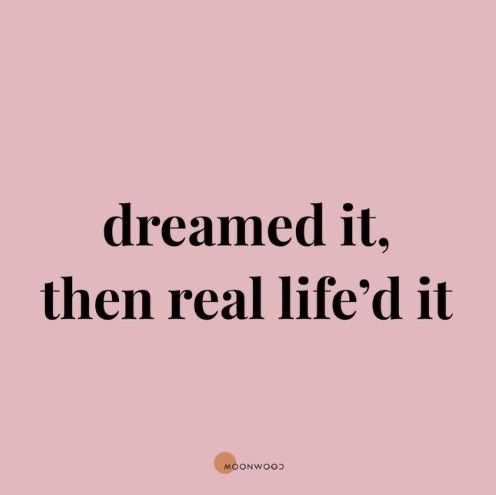
I came across a short phrase on pinterest the other day, just six words typed in clean black serif: dreamed it, then real life’d it.
I stopped scrolling and just stared at the screen for a long minute.
There are phrases you read on the internet that feel like cheap motivation, the kind of polished slogans people post when they want to look like they have everything under control. But every once in a while, a sentence catches you in the exact place where your reality is unfolding, and you realize it is no longer an aspiration. It is an inventory.
That is what this moment feels like.
I am sitting by the wide, north-facing window of my home, watching the early light spill across the floorboards. The house is completely quiet, except for the soft sound of the kettle heating on the stove and the distant, familiar rustle of morning wind through the trees outside. There is a specific kind of stillness that exists only in a place that belongs to you. Not a rented room where your presence is temporary, not a house where you have to hold your breath so you do not disturb someone else’s moods, and not an apartment where the sound of traffic reminds you of how fast everyone else is rushing.
Just land. Just space. Just my own four walls, built out of the ground I bought with my own labor, holding my life with an easy, permanent grip.
For years, I carried this home around in my head like a secret. I had the layout sketched in the margins of old notebooks. I knew the height of the ceilings before the foundation was even dug. I knew the way the air would smell when the rain hit the soil outside the veranda. I knew how the light would pool on the floor at seven in the morning. When you spend a long time in small, cramped spaces, your imagination becomes your only real estate. You build entire worlds inside your mind because the physical room you are sitting in is simply too tight for the size of your spirit.
And then, one day, the imaginary world stops being an escape and starts demanding to be built.
I remember the day the title deed was finally signed and stamped, the dry, thick paper resting in my hands with my name printed cleanly across the top. No middlemen. No corporate estate managers slipping hidden service fees under the door. No landlord knocking on the first of the month. An independent, agricultural freehold parcel of land, unchallengeable and clear, stretching out under the sun, waiting for a life to be planted on it.
We brought the machines. We broke the soil. We pressed the earth into solid, interlocking blocks, stacking them course by course until the walls rose up out of the red dirt. I watched the timber rafters go up, dark and heavy and exposed against the high ceilings, creating an umbrella of shade that keeps the rooms cool even in the heat of the dry season. I laid down smooth, warm floors that feel kind to bare feet, put in deep windows that let the sky become the art on the wall, and built a wide, wrap-around veranda where an afternoon can pass without anyone asking you what you produced today.
Standing on this ground now, with my lemon grass tea in hand, without a single worry about traffic or tight corners, the feeling is almost disorienting. You spend so much energy pulling a dream toward you, fighting through the delays, the doubts, the slow seasons, and the quiet loneliness of holding a vision alone, that when it finally arrives and sets down its roots, your body takes a moment to understand that the fight is over.
You are no longer asking for the land. You are walking on it.
You are no longer praying for the house. You are locking the front door from the inside.
And the peace does not stop at the perimeter of the homestead. It stretches all the way into the city, into the physical reality of my business.
For the longest time, my gift shop was a nomad. It lived in the corners of my living room, on the edges of kitchen counters, tucked into storage boxes stacked against bedroom walls, and squeezed into crowded delivery bags. I was the designer, the printer, the courier, the customer service agent, the accountant, and the janitor. If I had a headache, production stopped. If I needed to rest, the revenue paused. The business was alive, but it was tethered entirely to my physical stamina, and living like that will eventually wear the spirit down to the bone.
I used to close my eyes and imagine what it would feel like to walk into a real, dedicated physical storefront. A proper shop. A place with high, airy ceilings, warm lighting, and wide display tables of smooth natural wood. A place where the scent of rich paper, dried botanical bundles, and premium packaging fills the room the second the door opens. A location that makes sense; clean, safe, easily accessible, with smooth roads, parking that does not require an Olympic maneuver, and a steady stream of clients who walk in already understanding the value of thoughtful gifting.
I dreamed that location into being, and then I went out and secured the lease.
Walking into the shop now feels like stepping into the physical embodiment of my own standard. The glass on the storefront is clear and wide, letting the morning sunlight flood across the curated displays of handcrafted cards, personalized keepsakes, and luxury gift boxes. There is no clutter. No panic. Every item sits on its shelf with room to breathe, organized with the kind of understated elegance that tells a customer, before they even look at a price tag, that they are in the hands of someone who respects the craft.
The best part of the shop, though, is not the aesthetic.
The best part is that I am not the only one holding the keys.
One of the greatest traps of being an ambitious woman who has had to survive on her own for a long time is the belief that nobody can do it like you can. You convince yourself that your hyper-independence is a virtue, when in reality, it is just fear dressed up as excellence. You hoard the tasks because you are terrified that if you let someone else touch the work, the standard will drop and everything will fall apart.
I decided I was done being a prisoner of my own creation.
I hired. I brought in people who are capable, warm, and attentive. I took the time to train them, not just on the logistics of how to handle the stock or process a payment, but on the soul of the brand. They understand how to speak to a customer who is looking for the right words to honor a milestone. They know how to wrap a box with clean, crisp edges and tied ribbons that look like art. They take pride in the space, keep the counters spotless, manage the floor with an easy, welcoming grace, and handle the inquiries with genuine care.
Now, when I look at my phone in the middle of a Tuesday afternoon while sitting on my veranda miles away, I see the notifications of sales being processed, orders being dispatched, and clients leaving glowing notes, and my hands are completely free.
The shop runs.
The systems work.
The business has its own heartbeat, its own momentum, and its own operational intelligence. It does not require me to bleed into it every single day for it to thrive. Stepping out of the frantic daily operator role and into the seat of the founder has bought me back the most expensive commodity on earth: my own time.
I have my mornings back. I have my mental clarity back. I have the freedom to spend an entire morning reading, sketching new concepts, or sitting on the rug with my son, building elaborate Lego towers, without that sickening background hum of guilt telling me I should be answering emails. The business serves my life now; my life is no longer sacrificed to feed the business.
And inside the production studio, the machinery finally tells the same story of ease.
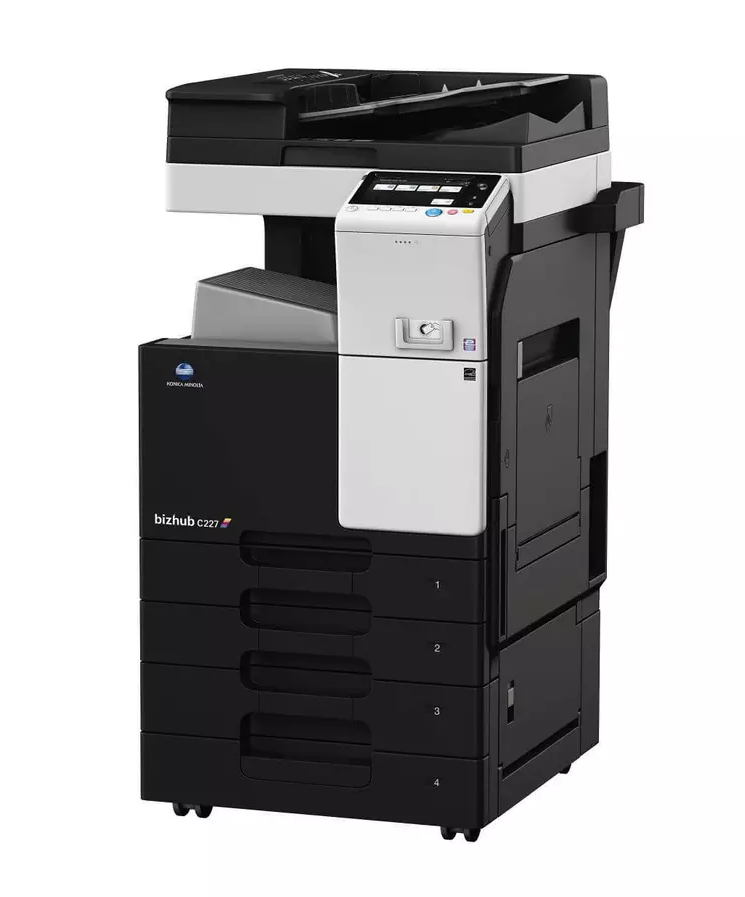
If you have ever tried to run a print and stationery business with temperamental, entry-level equipment, you know the specific psychological torment of a machine that refuses to cooperate during a deadline. The paper jams, the misaligned margins, the streaky ink heads, the hours spent running cleaning cycles, the wasted cardstock, the frantic trips across town to outsource printing to third parties who treat your carefully drafted artwork like scrap paper, it is an invisible drain that eats away at your sanity.
I remember the nights I sat on the floor with ink on my hands, staring at a broken piece of hardware, swearing to the quiet room that one day, my tools would match the caliber of my ambition.
Today, the studio is filled with the low, steady, confident hum of commercial-grade machinery that actually works.
Heavy-duty, precision digital printers that feed thick, three-hundred-gram textured artcard without a single stutter. Machines that lay down rich, deep, saturated color that dries instantly and never smudges. Digital cutters that slice through paper and vinyl with surgical accuracy, producing crisp, flawless edges every single time. Heat presses with even, digital temperature controls that seal custom work smoothly, without burning or bubbling.
Every tool I need is right there in the room, fully owned, fully maintained, and completely paid for.
Turning on the studio in the morning is no longer a gamble; it is a pleasure. You send the file, you press print, and the machine simply does what it was engineered to do. The paper glides through. The cuts are clean. The packaging is fast. The finished pieces stack up on the worktables in neat, immaculate piles, ready for delivery.
The absence of friction in my daily work has completely altered my nervous system. When your tools work, your creativity stops feeling like a struggle against physics and starts feeling like an unhurried, enjoyable rhythm. You make better things because you are not exhausted by the process of making them.
And underneath all of it; underneath the land, the home, the physical shop, and the reliable machinery, lies the quietest, most radical upgrade of all: the savings.
I spent so many years living with an ear permanently pressed to the ground, listening for the footsteps of financial ruin. When you are a young single mother trying to build something out of nothing, money feels like water slipping through your fingers. Even when you make it, you are terrified to look away, because there is always an emergency waiting around the corner to wipe out whatever small cushion you managed to gather. You live in a state of chronic financial hyper-vigilance, where every unexpected expense feels like a personal indictment.
That survival cycle is completely broken now.
There is real, solid money sitting in the bank.
Not just money to cover this month’s inventory or next month’s overhead, but deep, unbothered savings that sit there simply to provide a floor of absolute safety. Emergency reserves that could carry my household and my business through months of total silence without breaking a sweat. Dedicated investment accounts growing quietly in the background. A fully funded, untouchable education account for my son that guarantees his future will never be dictated by the presence or absence of anyone else’s support.
I can open my banking app now and look at the screen without that ancient, sharp tightening in my chest.
The numbers are steady. They are abundant. They are more than enough.
Having savings changes the way you walk through the world. It changes the tone of your voice. You stop taking on clients who drain your energy because you do not need their money to keep the lights on. You stop rushing into bad partnerships out of a fear of missing out. You stop negotiating with your own standards. When you have money in the bank, your “no” becomes an immovable wall, and your “yes” becomes a deliberate, joyful choice.
Wealth, to me, was never about showing off. It was never about flashy labels, noisy crowds, or performing success for people I do not even know.
Wealth has always been about sovereignty.
It is the ability to wake up on your own land, look out at the trees, and know that nobody can evict your peace.
It is having a physical business that thrives on clean systems and trusted hands, allowing you to step away whenever your soul needs quiet.
It is having tools that perform without breaking your spirit, bills that get paid automatically without a second thought, and a cushion of resources deep enough that an unexpected inconvenience remains just an inconvenience, never an emergency.
It is watching your child grow up in a spacious, sunlit world, knowing that his mother did not just teach him how to endure hard things, but showed him how to build a life so safe and wide that endurance is no longer the daily requirement.
I look around at this life today, and I feel an overwhelming, grounded reverence for the process that brought me here.
None of this was an accident. None of this was handed to me through a stroke of blind luck or a rescue boat sent by someone else.
I dreamed every single detail of this reality into existence during the seasons when there was no physical evidence to support it. I held the picture of this land when I was stuck in noisy apartments. I held the picture of this storefront when I was packing orders on my living room floor. I held the picture of these smooth, reliable machines when I was crying over broken printers in the middle of the night. I held the picture of this financial overflow when I had to calculate every coin in my purse.
I protected the vision when it made no practical sense to protect it. I refused to let the smallness of my immediate circumstances convince me that smallness was my destiny.
And then, day by day, choice by choice, boundary by boundary, I did the unglamorous, consistent, holy work of pulling that vision out of the ether and fastening it to the earth.
I laid the foundation. I took the risks. I made the calls. I learned the skills. I signed the papers. I hired the help. I built the systems.
I dreamed it.
And then, with both feet firmly planted on the ground, with a quiet heart and clean hands,
I real life’d it.
And standing here in the middle of it all, looking out at the sun climbing into the wide Kenyan sky,
I can honestly say:
it is even better than the dream.