
There I was, sitting on the edge of my bed on a Sunday evening, feeling that all-too-familiar “heavy” sensation. It wasn’t just about the numbers on the scale; it was the way my joints felt stiff, my skin looked dull, and my energy seemed to have evaporated into the city smog.
I had spent the last month surviving on what I call “decision-fatigue food”, pre-packaged meals, quick takeaways, and too much caffeine. My body was screaming for a hard reset, but the thought of another hyper-complex, expensive diet plan made me want to cry.
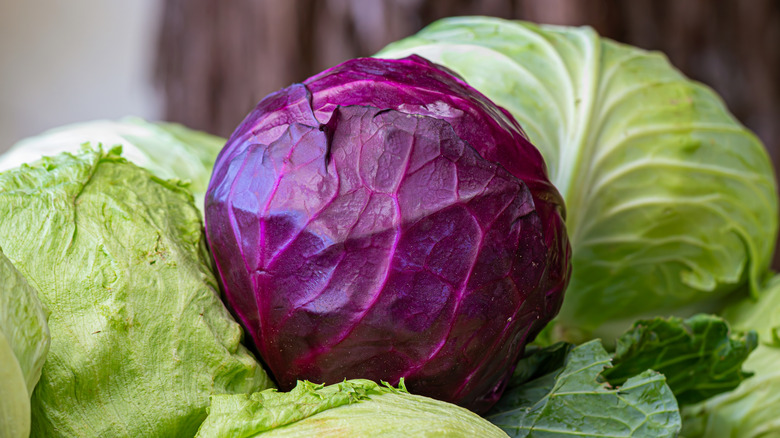
In a world where we are bombarded with $100 supplements and “revolutionary” powdered shakes, I found myself staring at a simple head of green cabbage in my local grocery store. It was humble, cheap, and arguably the most un-glamorous vegetable in the aisle. Yet, I remembered my aunt, a woman who always radiated a certain earthy vitality, talking about how a simple pot of soup could “rinse out” the system.
I’ll be honest: I was skeptical. I’ve seen the 2000s magazine covers. I’ve heard the jokes about the “Cabbage Soup Diet” and the unfortunate side effects of eating too much cruciferous fiber. But I was desperate enough to dig past the fads and look at the actual biological reality.
Could cabbage soup for weight loss actually be a legitimate, science-backed tool for healing, or was I just boiling water and hope? As it turns out, the science is a lot more intriguing than the magazines led us to believe.
Table of Contents
The Science of Volumetric Eating and Satiety
The primary reason cabbage soup for weight loss has stood the test of time isn’t magic, it’s physics. Human hunger is governed by various signals, including the physical stretching of the stomach. This is called “volumetric eating.” Cabbage is roughly 92% water, meaning you can consume a massive volume of food for a negligible amount of calories.
When you consume a warm broth packed with fiber-rich vegetables, your stomach distends, sending a signal to the brain’s hypothalamus that you are full. In clinical studies, participants who began a meal with a low-calorie soup consumed up to 20% fewer calories during the actual meal. It’s a biological “pre-load” that tricks your hunger hormones into a state of peace before you reach for the higher-calorie fats and starches.
But it isn’t just about the water. Cabbage is an elite source of insoluble fiber. This type of fiber doesn’t dissolve; it moves through your system, picking up debris and ensuring your digestion doesn’t become stagnant.
When we talk about a detox soup diet, we shouldn’t think of it as some mysterious “toxin-purging” liquid; we should think of it as a biological broom. By improving motility, you reduce the bloating and waste-retention that often disguise themselves as extra pounds.
Activating the Metabolic Furnace
We’ve all heard of metabolism-boosting foods, but cabbage actually earns the title. This vegetable belongs to the Brassica family, a group of plants loaded with sulfur-containing compounds called glucosinolates. From a scientific perspective, these compounds are remarkable. They aid in the liver’s Phase II detoxification pathway, which is essential for processing and eliminating fat-soluble wastes.
If your liver is sluggish from a diet of processed oils, it cannot efficiently metabolize fat. By incorporating a broth rich in cabbage, onions, and celery, you are effectively giving your liver the raw materials it needs to perform its primary fat-burning functions.
Furthermore, cabbage possesses a high “Thermic Effect of Food” (TEF). This means that your body actually has to spend a significant amount of energy just to break down the tough, fibrous cell walls of the cabbage. While “negative calorie” claims are a bit of a stretch, the net calorie gain from a bowl of cabbage soup is incredibly low because the metabolic “cost of entry” to digest it is so high.
The Gut-Hormone Connection
Weight loss is rarely about willpower; it’s usually about hormones. When we eat highly processed sugars, our insulin spikes, which signals our body to store fat and stop burning it. However, the complex carbohydrates found in fiber-rich vegetables prevent these spikes.
Turning the “Bland” into a Gourmet
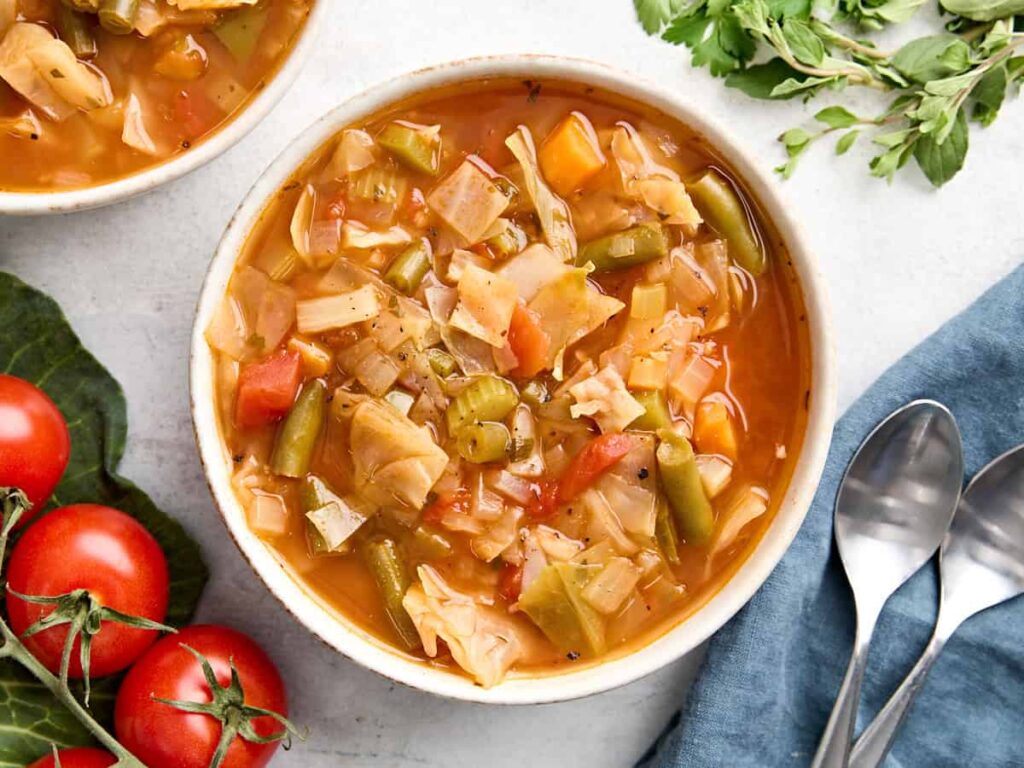
The reason most people fail when trying cabbage soup for weight loss is that they make a soup that tastes like despair. They boil cabbage and water and wonder why they feel miserable. The key to making this a sustainable habit is viewing the soup as a vehicle for healthy soup recipes that you actually enjoy.
In my own kitchen, I’ve moved away from the watery broths of the past. I start with a base of garlic and onions (both incredible for cardiovascular health) and I use bone broth or a high-quality vegetable stock. I add turmeric and black pepper, a combination proven to reduce inflammation, which is often the “hidden” cause of stubborn weight gain. I throw in handfuls of fresh parsley or cilantro to help flush out excess heavy metals and sodium.
When the soup is flavorful and satisfying, the “diet” stops feeling like a punishment and starts feeling like a sanctuary. It becomes a warm, nourishing hug for your internal organs.
Beyond the Weight: The Secondary Benefits
When you commit to including cabbage soup for weight loss in your routine, you notice changes that have nothing to do with the scale. Because cabbage is high in Vitamin C and Vitamin K, my skin usually begins to clear up within three or four days. Vitamin K is essential for bone health and proper blood clotting, while the sulfur compounds are “beauty minerals” that support the production of keratin for your hair and nails.
It also acts as a natural diuretic. Many of us are carrying five to ten pounds of “inflammation weight”, excess water stored by the body to dilute a high-salt, high-sugar diet. A few days of focusing on cabbage-rich, healthy soup recipes helps the body shed that excess fluid, which often explains the dramatic “drops” people see in their first week.
Moving From “Crash Diet” to Independent Wellness
The problem with the old “Cabbage Soup Diet” was that it asked people to be “foolish enough to survive” on nothing else for a week. That is a recipe for a metabolic crash. My approach is different. I treat cabbage soup as my “nutritional baseline.
If I have a big lunch or a stressful day, my dinner is always a bowl of soup. It’s my insurance policy. It allows me to stay within my caloric needs without ever feeling the “panicked hunger” that leads to binging.
This is the difference between a temporary fad and a long-term lifestyle choice. We don’t have to be dependent on expensive weight-loss clinics or pharmaceutical “fixes” that only address the symptoms of a bad diet. We can go back to the basic, independent logic of a vegetable that has fed humans for millennia.
Frequently Asked Questions (FAQ)
1. Is it safe to do a detox soup diet for more than a week?
If you are eating only soup, you shouldn’t go beyond 7 days because your body needs healthy fats and varied protein sources to maintain muscle mass and hormonal health. However, including cabbage soup for weight loss as one of your meals every day can be done indefinitely as part of a balanced diet.
2. Can I use different types of cabbage?
Absolutely. While green cabbage is traditional, red cabbage is even higher in antioxidants (specifically anthocyanins). Napa cabbage is softer and sweeter, which works beautifully if you are trying out Asian-inspired healthy soup recipes.
3. Does the soup actually burn fat?
Cabbage soup helps create a caloric deficit, and its high fiber and sulfur content support the liver and metabolic processes that lead to fat burning. It is an “assistant” to fat loss rather than a magical burner, but its role in metabolism-boosting foods is backed by its thermic effect.
4. How do I prevent the bloating associated with fiber-rich vegetables?
This is a common concern! To minimize gas, make sure you cook the cabbage thoroughly rather than eating it raw in the soup base. Adding carminative spices like ginger, fennel seeds, or cumin can significantly reduce bloating while adding depth to the flavor.
5. What is the best way to store the soup?
Cabbage soup actually tastes better the second day! You can store it in the fridge for up to 5 days, or freeze it in individual portions. Having a ready-made bowl of soup prevents those 10:00 PM “emergency” takeaways.
Conclusion
In summary, the transition from seeing cabbage as a “poverty food” to seeing it as a metabolic powerhouse is one of the smartest shifts a health-conscious person can make.
We ususally look for healing from pharmacies, yet our primary “ailment” is often just a disconnect from the fiber and nutrients our bodies evolved to thrive on. While pharmacies are in the business of selling sales and repeat prescriptions, your local vegetable market is selling the building blocks of cellular repair.
By utilizing cabbage soup for weight loss, you aren’t just following a trend; you are utilizing the biological logic of volumetric eating, insulin regulation, and liver support. You are choosing a path that prioritizes satiation over deprivation.
Whether you are doing a 3-day reset or just looking for healthy soup recipes to round out your evenings, remember that the most effective solutions are often the ones we’ve overlooked because they weren’t wrapped in a glossy box.
Real healing doesn’t have a marketing department; it has deep roots and a tight, green head of leaves. Give your body the fiber-rich vegetables it’s been craving, and let the science of nature do the work.
You might like: Back to the Roots