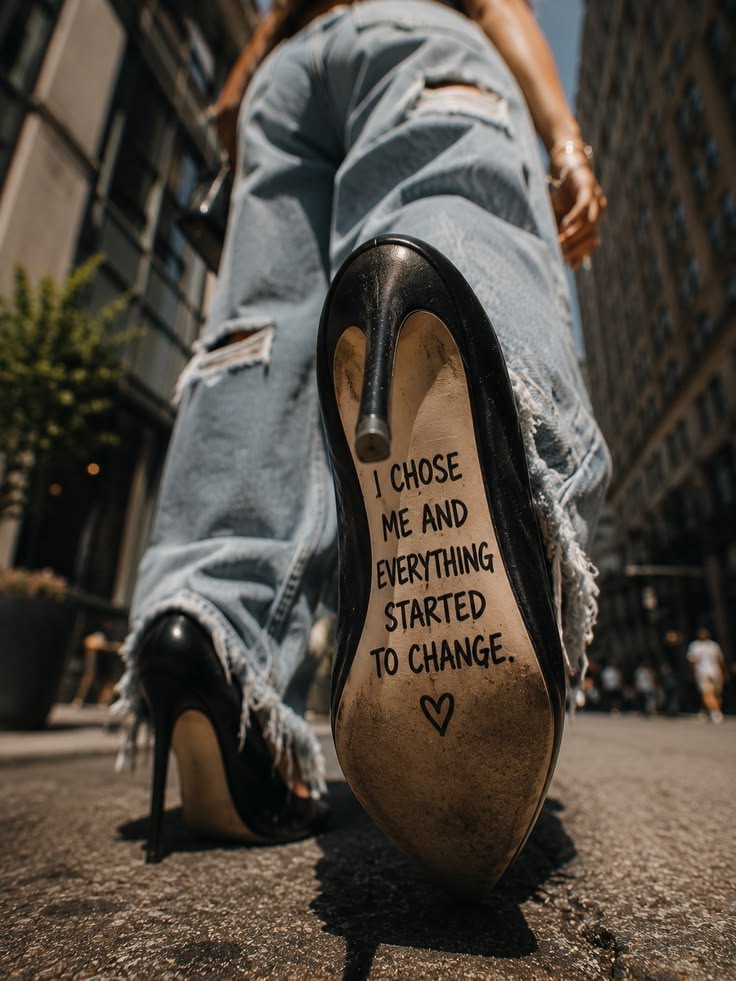
I have been thinking about how much of our lives happens without us consciously deciding to live it that way. We wake up, respond to messages, go about our responsibilities, make decisions, interact with people, react to situations, and go to bed. The days change, the people change, the circumstances change, but sometimes the way we experience everything remains remarkably similar. We keep finding ourselves in familiar situations, having familiar arguments, experiencing familiar disappointments, making familiar promises to ourselves, and wondering why we seem to keep ending up in the same place. At some point, I think we have to ask ourselves whether we are actually making new decisions or simply repeating old ones in different circumstances.
It is an uncomfortable question because most of us like to think we are in control of our lives. We believe we are making choices based on what is happening now, what we want, and what makes sense at the time. But how many of those decisions are genuinely deliberate? How many are influenced by things that happened years ago, things we learned growing up, experiences we never properly processed, or beliefs we have carried for so long that we no longer recognise them as beliefs? How many times have we reacted to something in the present as though we were still dealing with something from our past?
I find it interesting that we can consciously want a different life while continuing to participate in the same patterns that created the life we are trying to leave behind. We can say we want peace but keep entertaining situations that disturb it. We can say we want financial stability but avoid looking at our spending habits. We can say we want healthy relationships but keep giving access to people who have repeatedly shown us that they cannot offer what we need. We can say we want to grow, become more disciplined, and do things differently, but when the moment comes to make a different choice, we find ourselves doing exactly what we have always done.
And afterwards, we wonder why nothing changes.
Perhaps the problem is not always that we do not know what we want. Sometimes we know exactly what we want. The problem is that wanting something and being accustomed to living in a way that supports it are two very different things.
How much of your life is actually a collection of decisions you have consciously made, and how much is a collection of patterns you have never stopped to question?
Think about the way we respond to people. Someone takes too long to reply to a message, and suddenly we are anxious, overthinking, checking our phones, wondering whether we said something wrong, and trying to figure out what changed. Someone gives us attention after being distant, and we immediately feel relieved. Someone disappoints us, but instead of examining whether the relationship is working, we begin looking for explanations that make it easier to stay. We may tell ourselves that we are responding to the person in front of us, but sometimes our reactions are much bigger than the situation itself.
Perhaps we have experienced abandonment before. Perhaps we grew up feeling that affection had to be earned. Perhaps we became accustomed to being the person who understands everyone, forgives everything, accommodates everyone, and rarely asks for much in return. Over time, these experiences can become more than memories. They can become patterns of behavior. We start anticipating rejection, overexplaining ourselves, seeking reassurance, or tolerating inconsistency because those responses feel familiar.
The difficult part is that familiarity can feel like truth. If we have spent years experiencing a particular kind of relationship, we may unconsciously begin to believe that this is simply how relationships work. We might even become uncomfortable when someone behaves differently because we do not know what to do with consistency, honesty, or affection that does not come with uncertainty.
We say we want something different, but our instincts keep directing us towards what we recognise.
I wonder how many people are actually choosing their relationships freely, and how many are responding to old emotional needs. How many are staying because they genuinely want to be there, and how many are staying because leaving would force them to confront loneliness, rejection, or the uncomfortable feeling of not being chosen? How many are calling something love because it resembles an experience they have been trying to make work since childhood?
It is not always easy to distinguish between the two. We can genuinely love someone and still have patterns that make the relationship unhealthy. We can want companionship and still be afraid of intimacy. We can desire consistency but find ourselves drawn to people who make us work for their attention. Recognising these contradictions does not mean our feelings are false. It means our feelings are not always enough to explain our decisions.
And this is not limited to relationships. The same thing happens with money, work, ambition, and even the way we spend our time.
Some people have a pattern of starting things enthusiastically and abandoning them when the excitement wears off. Others spend so much time planning that they rarely get around to doing anything. Some constantly seek new opportunities but struggle to finish what they have already started. Others remain in situations they have outgrown because the uncertainty of changing direction feels more threatening than the dissatisfaction of staying.
We can spend years telling ourselves that we need to become more disciplined, more confident, more organised, or more courageous. But perhaps we need to examine what happens between the moment we make that promise and the moment we break it. What do we do when the work becomes boring? What do we do when we are no longer receiving encouragement? What do we do when progress is slower than expected? What do we do when an uncomfortable feeling appears?
Do we continue? Do we avoid the task? Do we find something else to occupy our attention? Do we convince ourselves that tomorrow will be different?
And how many tomorrows have we spent repeating the same conversation with ourselves?
I think there is something particularly interesting about the way our minds become attached to familiar outcomes. We may complain about our circumstances while also behaving in ways that keep those circumstances intact. Not necessarily because we want to struggle, but because the patterns we have developed are familiar and sometimes serve a purpose we have not examined.
For example, procrastination may look like laziness, but sometimes it is an attempt to avoid the possibility of doing something badly. If we never finish the project, we never have to find out whether people like it. If we never submit the application, we never have to experience rejection. If we never launch the business, we never have to confront the possibility that it might not work. Staying in preparation mode can feel productive because we are doing something, but it also protects us from having to face an uncertain outcome.
Similarly, perfectionism can become a way of delaying exposure. We tell ourselves that we are waiting until everything is ready, until the website is better, until the product photographs are perfect, until we have enough money, until we feel more confident. Some preparation is necessary, of course. But sometimes we keep improving the same things because putting them out into the world requires a level of vulnerability we are not yet comfortable with.
We can even become attached to being overwhelmed. We are so accustomed to operating under pressure that we struggle to function when things are calm. We postpone important tasks until the deadline is close, then rely on urgency to get everything done. We complain about the stress but continue recreating the conditions that produce it. Eventually, working under pressure becomes part of how we understand ourselves. We start believing that we perform best when everything is falling apart, even though we are exhausted by the experience.
I wonder how many of our personalities are actually collections of coping mechanisms that we have repeated until they became familiar.
The person who always says yes may have learned that being useful is how they maintain relationships. The person who avoids difficult conversations may have learned that disagreement threatens connection. The person who needs to control every detail may have experienced enough uncertainty to associate control with safety. The person who constantly expects the worst may believe that anticipating disappointment will somehow make it hurt less.
These behaviors may have helped us navigate certain situations at some point in our lives. They may even have been necessary. But something that helped us survive one environment can become a limitation in another. The problem is that we do not always recognise when the environment has changed and the old response is no longer needed.
We continue operating from the same instructions even when the circumstances that created those instructions no longer exist.
And perhaps this is why personal growth can feel so uncomfortable. It is not always about learning something new. Sometimes it is about noticing the things we have been doing automatically and deliberately choosing not to do them anymore.
Think about how often we say, “That’s just how I am.”
I am an overthinker. I am bad with money. I am not good at communicating. I am always unlucky. I am someone who struggles to finish things. I am too emotional. I am not confident. I am not good at relationships.
At what point did these descriptions become permanent identities? Did we examine them, or did we simply repeat them until they became part of the way we introduced ourselves to the world? And if we keep identifying with them, how much effort do we make to behave differently?
There is a difference between acknowledging a tendency and accepting it as an unchangeable part of our identity. I can recognise that I overthink without deciding that I must always be controlled by my thoughts. I can acknowledge that I have made poor financial decisions without deciding that I will never become good with money. I can recognise that I have struggled with consistency without making inconsistency a permanent description of who I am.
But changing those descriptions is only the beginning. At some point, our behavior has to change, too.
This brings me back to the idea of consciousness and the practice of observing ourselves. We spend so much time observing other people. We notice their habits, their mistakes, their contradictions, the way they treat us, and the things they repeatedly do. We can often identify someone’s pattern long before they are willing to acknowledge it themselves. Yet when it comes to our own behavior, we sometimes struggle to see what is happening because we are too close to it.
Perhaps we need to become more interested in our own patterns than in other people’s explanations.
Why do I react this way? Why does this particular situation make me uncomfortable? Why do I keep postponing this one thing? Why do I feel compelled to explain myself when I have already made my decision? Why do I keep returning to something I have repeatedly said I want to leave behind? Why do I make the same promise to myself every Sunday and break it by Wednesday?
These are not questions we should ask to punish ourselves. They are questions that can help us understand the difference between what we consciously want and what our habits are currently supporting.
And I think we should pay attention to the small decisions, because patterns are not always dramatic. Sometimes they are found in the ordinary things we do without thinking. The way we reach for our phones whenever we feel uncomfortable. The way we spend money when we are stressed. The way we avoid checking our accounts because we do not want to see the numbers. The way we agree to things we do not want to do. The way we abandon routines after one imperfect day. The way we wait for motivation before doing something we already know needs to be done.
None of these decisions may seem particularly significant on its own. But repeated over months and years, they contribute to the life we experience.
We often talk about wanting a breakthrough, a fresh start, a new chapter, or a completely different reality. We imagine that something significant will happen and suddenly everything will change. Sometimes circumstances do change dramatically. But I am beginning to think that many of the changes we desire also require us to interrupt the ordinary repetitions that have been keeping us in the same place.
If I want a different financial experience, I cannot keep avoiding the numbers and expect a different relationship with money. If I want healthier relationships, I cannot continue rewarding inconsistency with unlimited access to me. If I want to build something meaningful, I cannot keep abandoning the work whenever it stops being exciting. If I want peace, I have to examine the things I repeatedly invite into my life, the conversations I keep entertaining, and the situations I continue participating in.
This is where the idea of “I AM” becomes interesting again. If I am consciously choosing a new identity, what happens when my old habits contradict it? If I say I am disciplined but repeatedly avoid the responsibilities that would require discipline, what am I actually practising? If I say I value myself but continue making decisions that communicate otherwise, which one is shaping my experience more: the words I speak or the behavior I repeat?
Perhaps identity is not only something we declare. Perhaps it is also something we reinforce through our daily decisions.
I do not think this means we must become perfectly consistent, never make mistakes, or monitor every thought and action. That would be exhausting, and it would turn self-awareness into another form of pressure. We are human. We will have emotional reactions, fall into old habits, make poor decisions, and sometimes do things we promised ourselves we would not do. The point is not to eliminate every repetition. It is to become aware enough to recognise when we are repeating something that no longer serves us.
There is also a difference between a conscious choice and a familiar reaction. A conscious choice allows us to consider what we want, what the situation requires, and what the consequences might be. A familiar reaction often happens before we have had the opportunity to consider any of those things. Someone says something unpleasant, and we immediately become defensive. We feel anxious, and we immediately look for reassurance. We experience disappointment, and we immediately assume everything is going wrong. We feel uncomfortable, and we immediately distract ourselves.
What if we learned to create a little space between what happens and what we do next?
That space may not look significant from the outside, but it can change a great deal. It gives us an opportunity to ask whether the response we are about to make is actually appropriate for the situation or whether we are simply following an old instruction. It allows us to choose something different, even when the familiar response feels more natural.
And perhaps choosing differently is how we begin to discover who we are outside the patterns we have repeated for years.
I want to know how many things I do because I genuinely want to do them and how many I do because I have become accustomed to doing them. I want to understand which of my habits are helping me build the life I desire and which ones are simply keeping me comfortable with the life I already know. I want to recognise the difference between a decision that reflects my values and a reaction that reflects an old fear.
Most importantly, I do not want to spend so much time talking about the person I want to become while continuing to give my old habits the final say in how I live.
Perhaps the question is not whether we can change our lives. Perhaps it is whether we are willing to stop participating in the same patterns long enough to find out what else is possible.
Because sometimes we are not waiting for a different life to begin. We are waiting to make a different decision.
And until we recognise what we keep repeating, we may continue mistaking familiarity for fate.
So, are you actually living the life you are choosing, or are you simply repeating a life you have become accustomed to?