For a long time, I have been interested in the relationship between our thoughts, our beliefs, the words we speak over our lives, and the things we eventually experience. I have wondered how much of what we call reality is influenced by the way we see ourselves, what we believe is possible, and what we have quietly accepted as impossible. I have thought about the phrase “I AM,” the power we give to our words, the idea of manifestation, and the possibility that consciousness plays a much bigger role in our experience of life than we fully understand. But at some point, thinking about these things is no longer enough. I want to know what happens when I actually try them.
What if, instead of spending another few months reading about manifestation, questioning whether affirmations work, listening to people explain how they attracted money or opportunities into their lives, and wondering whether there is something to all of it, I decided to conduct my own experiment? What if I took the ideas seriously enough to practise them consistently, observed what happened, and documented the experience without deciding in advance what the results had to mean?
I am not talking about repeating a few sentences in the morning, going about my day as usual, and expecting life to rearrange itself by evening. I want to explore the entire idea. The relationship between identity and action. The things I expect from life. The things I have unconsciously ruled out. The way I respond to opportunities, the way I think about money, the way I interpret setbacks, and the possibility that changing the person I believe myself to be could change the way I experience my circumstances.
I also want to remain honest about what I do not know. I do not want to convince myself that every coincidence is a message from the universe or that every good thing that happens is proof that I have mastered some spiritual principle. I do not want to dismiss an experience simply because I cannot explain it, either. I want to be curious enough to observe and grounded enough to question my conclusions.
Perhaps that is where the experiment begins: not with certainty, but with a willingness to find out.
What Would Happen If I Changed the Way I See Myself?
One of the ideas that interests me most is the relationship between identity and experience. We carry descriptions of ourselves that have been built over years of experiences, disappointments, family beliefs, financial circumstances, relationships, and things other people have said about us. Some of these descriptions are obvious. Others have become so familiar that we no longer recognise them as beliefs.
We say things like, “Money is always difficult for me,” “Nothing ever works out for me,” “I am unlucky,” or “People like me do not get those kinds of opportunities.” Sometimes we do not even say these things aloud. We simply approach life as though they are established facts.
And because we believe them, we may make decisions that quietly reinforce them. We might hesitate to approach a client because we have already decided they will not pay our price. We might abandon an idea before giving it a fair chance because previous attempts did not work. We might interpret one disappointing result as evidence that nothing will ever change. We may stop looking for possibilities because we have become accustomed to expecting limitations.
What happens if I interrupt that pattern?
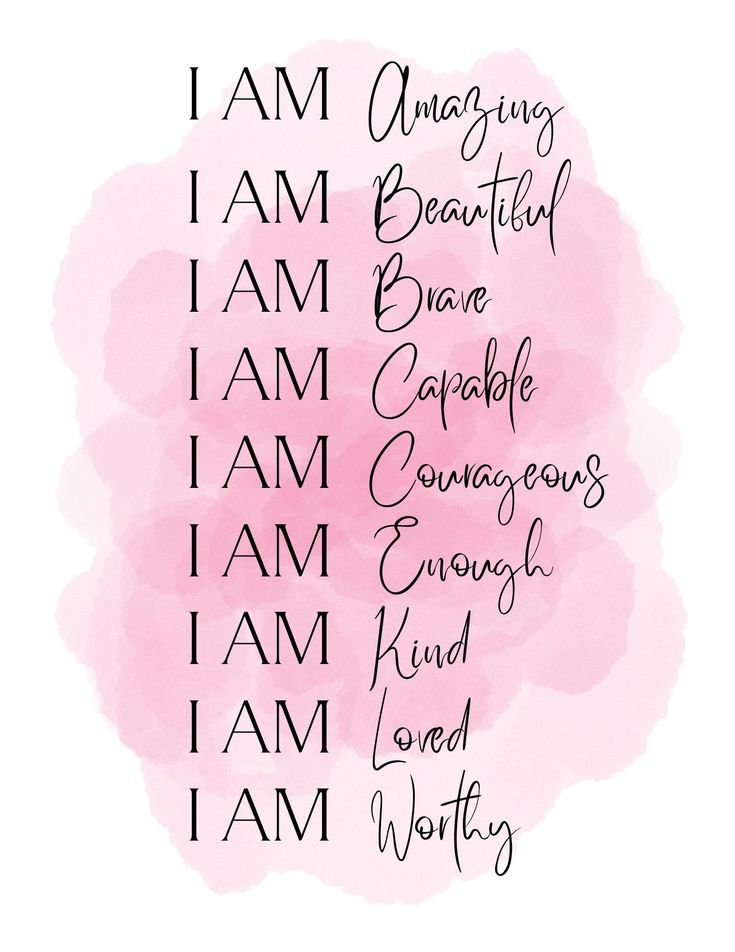
What if, instead of repeatedly identifying with my current circumstances, I begin identifying with the person I want to become? What if I start saying, “I am a woman who knows how to create opportunities,” “I am learning to manage money wisely,” “I am capable of building a successful business,” or “I am becoming someone who follows through on her decisions”?
At first, these statements might feel unfamiliar. Some might even feel ridiculous when my bank balance, sales figures, or immediate circumstances appear to contradict them. But perhaps the point is not to pretend that my current circumstances do not exist. Perhaps it is to stop treating them as the final definition of who I am or what I can become.
There is a difference between saying, “I have not figured out how to make this work yet,” and saying, “I am someone who cannot make this work.” One describes a situation. The other turns the situation into an identity.
I want to find out whether deliberately changing the identity I practise can change the decisions I make, the opportunities I notice, and the consistency with which I pursue what matters to me. That is something I can observe. I can pay attention to whether I become more willing to try, whether I stop abandoning things so quickly, whether I negotiate differently, whether I follow up instead of assuming rejection, and whether I make decisions from possibility rather than fear.
And perhaps there is more to explore beyond these observable changes. I am curious about that possibility, too. But I do not need to settle every philosophical question before I begin.
What If I Treated My Desires as Something to Explore, Not Just Something to Wish For?
I have desires. Things I want to experience, things I want to build, places I want to go, financial goals I want to reach, and versions of my life that I can imagine but have not yet experienced. Like most people, I have probably spent time thinking about what I want while also thinking about all the reasons it might not happen.
I want to experiment with approaching these desires differently.
Instead of choosing a desire, getting excited about it, repeating affirmations for a few days, and eventually returning to my usual patterns, I want to choose something specific and give the experiment enough time to teach me something. I want to decide what I am working toward, examine the beliefs I have about it, practise a new way of thinking, and observe what changes when I consistently combine that thinking with deliberate action.
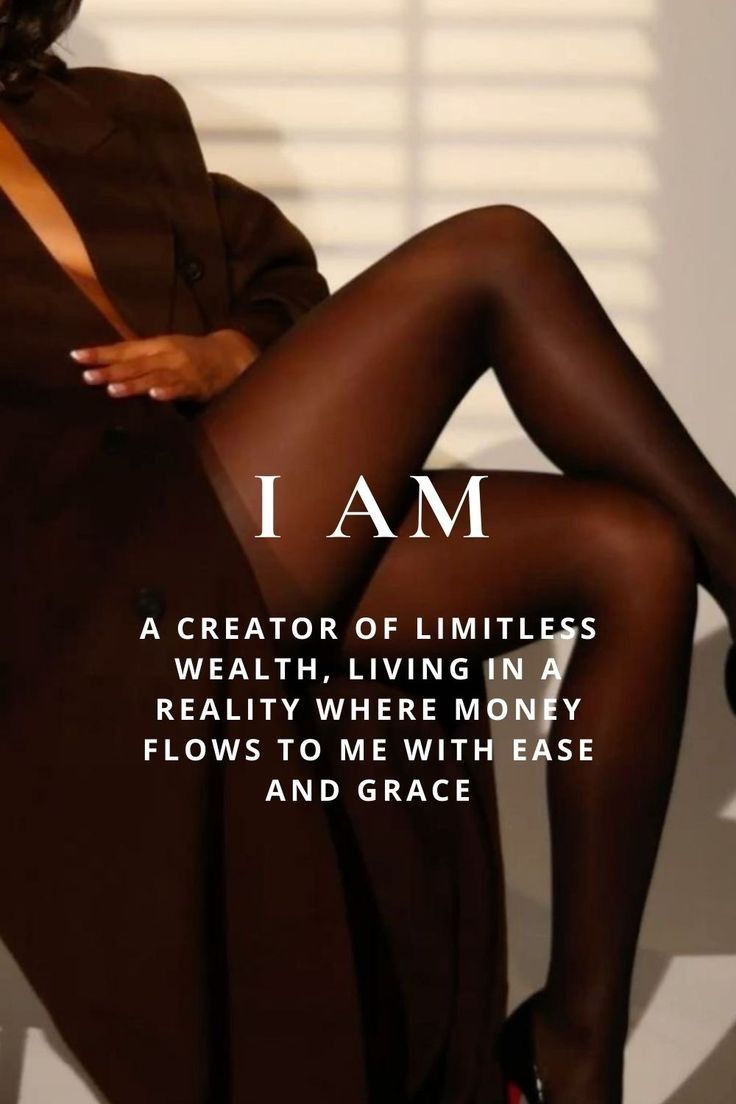
Money would be an interesting place to start. Not because money is the only thing that matters, but because it gives me measurable information. I can record what I earn, what I spend, how many people enquire about my products or services, how many sales I make, which opportunities arise, and what I actually do to pursue them. I can compare those figures with where I started instead of relying entirely on the feeling that something has changed.
Suppose I decide that I want to increase my income. I could begin by examining what I currently believe about making money. Do I expect things to be difficult? Do I associate earning more with exhaustion? Do I assume that customers will bargain, that people will not trust an online business, or that opportunities are scarce? Some of these concerns may reflect genuine market conditions, and I do not want to dismiss practical problems as negative thinking. But I can still ask whether my assumptions sometimes influence the way I respond to those conditions.
Then I can practise a different identity. I can remind myself that I am capable of learning, testing new ideas, improving my offers, communicating my value, and making better financial decisions. I can visualise the outcome I want, not simply as a fantasy but as a life I am preparing to participate in. And when the time comes to act, I can ask what someone building that life would do today.
Would she publish the product? Contact the potential client? Review the numbers? Improve the website? Follow up on an unpaid invoice? Try a new strategy? Would she continue working on an idea after the initial excitement faded?
These are the questions I want my experiment to bring into my everyday life.
I am interested in whether the practice of becoming intentional about who I am changes what I do. I am also interested in the things I cannot easily predict: the unexpected conversations, ideas, introductions, or opportunities that might appear while I am paying closer attention to what I want. I will record those things, too, without assuming that every unexpected event was caused by my thoughts.
The objective is not to manufacture a story about success. It is to observe what happens.
The Part About Speaking Things Into Existence
There is something fascinating about the idea that our words carry power. We speak about ourselves constantly, sometimes with a level of certainty we would never apply to predictions about anyone else. We say, “I will never get ahead,” “I always attract the wrong people,” or “I cannot do this,” and then wonder why it is difficult to imagine another possibility.
But I also want to question the stronger interpretation of this idea: that saying something makes it happen simply because we have spoken it.
If that were universally true, every person who had ever declared that they would be rich would be wealthy. Every person who had prayed for a particular outcome would have received it. Every confident person would succeed, and every fearful person would fail. That is not what we see in the world.
So what exactly are we testing when we speak something into existence?
Perhaps we are testing whether our words can change the way we think and behave. Perhaps we are testing whether repeatedly directing our attention toward a goal helps us recognise relevant opportunities. Perhaps spiritual practices offer meaning, hope, or a sense of connection that changes how we face uncertainty. Some people understand manifestation as something beyond these explanations. I can remain open to hearing those perspectives without presenting them as established facts.
For this experiment, I want to pay attention to the difference between a declaration and a wish.
If I say, “I am financially secure,” while avoiding my accounts, ignoring my debts, and refusing to examine my business performance, the words have not yet translated into a practical change. If I say, “I am building financial security,” and begin saving consistently, pricing my products appropriately, learning from my sales figures, and making deliberate decisions, I can observe the relationship between my identity statement and my behavior.
I also want to notice how the words make me feel. Do they help me approach challenges with more courage? Do they reduce the instinct to give up? Do they make me more hopeful without making me careless? Or do they create pressure to pretend that everything is fine when it is not?
If an affirmation becomes another way to shame myself for being afraid, struggling financially, or experiencing disappointment, then I need to reconsider how I am using it.
I do not want to become a person who is afraid of having a negative thought because she believes that one moment of doubt could ruin everything she is trying to create. I want to become someone who can experience doubt without allowing it to make every decision.
What About Prayer, Consciousness, and the Universe?
This is where the experiment becomes even more interesting to me.
What if prayer, meditation, visualization, and the practice of “I AM” are different ways people have explored their relationship with consciousness, existence, and something greater than themselves? What if some of these practices overlap in their effects, even when the beliefs behind them are different? And what if we can explore those similarities without pretending that all religions teach the same thing or that we have solved the question of what consciousness ultimately is?
I can pray for an outcome and also take practical steps toward it. I can visualize a future and also prepare for the work required to reach it. I can speak about abundance while examining my relationship with money. I can practise gratitude without denying what needs to change.
If I choose to use the language of the universe, I can ask for opportunities and remain attentive to the ones that appear. If I choose to pray, I can bring my desires, fears, and uncertainties into that practice. If I explore the idea of consciousness, I can pay attention to how awareness changes my experience of my own thoughts.
What I cannot honestly do is promise myself that these practices will compel the world to produce a particular outcome. I cannot guarantee that a specific amount of money will arrive because I visualised it, or that an event happened because I asked for it. But I can investigate what happens when I become more intentional about my inner life and more deliberate about my outer life.
I also want to be careful not to turn every experience into a test of my worthiness. People experience poverty, illness, loss, violence, and injustice for reasons that cannot fairly be reduced to their thoughts or beliefs. Any understanding of manifestation that makes suffering people responsible for everything that has happened to them is one I would question.
Personal agency matters. So do circumstances, other people, access to resources, chance, and systems that an individual cannot control.
Perhaps the most useful experiment is one that allows both truths to exist: I may have more influence over my life than I have been exercising, and I still do not control everything that happens to me.
Thirty Days of Paying Attention
I want to give this experiment thirty days to begin with. Not because thirty days is a magical period, but because it is long enough to practise consistently and short enough to review without endlessly postponing the results.
I would choose one main desire and record where I am starting. If the desire concerns money, I would write down my current income, recent sales, or whatever other figures are relevant. If it concerns something less measurable, I would define what meaningful progress would look like before beginning.
Every morning, I would spend a few minutes with my chosen “I AM” statement. I would sit with the identity I am trying to cultivate and imagine what living from that identity might look like. I would not force myself to feel certain or pretend that my doubts had disappeared. I would simply practise returning my attention to the person I am choosing to become.
During the day, I would look for one action that supports the desire. Sometimes it might be a significant action, such as pitching a new client or launching a product. Other days, it might be an ordinary action that I have been avoiding. The point would be to connect intention with participation in my own life.
At night, I would record what happened. I would note whether I practised, what actions I took, what measurable results appeared, and what I noticed about my thinking and behavior. I would also record unexpected opportunities, disappointments, and coincidences without immediately deciding what they meant.
At the end of each week, I would review the evidence. Did I follow through more consistently? Did my attitude toward the goal change? Did I take actions I would otherwise have avoided? Did the results improve? If they did, what are the plausible reasons? If they did not, what might need to change?
I would not move the goalposts simply to make the experiment look successful. I would not ignore setbacks because they were inconvenient to the story I wanted to tell. And I would not treat a disappointing result as proof that I had failed spiritually.
If the practice helps me become more focused, that is worth knowing. If it helps me act with greater confidence, that is worth knowing, too. If nothing measurable changes, that is information we can use. If something unexpected happens, I can document it and consider different interpretations.
I want to give the experiment a genuine chance without deciding in advance what its conclusion must be.
What If the Real Discovery Is Bigger Than the Result?
I still find the phrase “I AM” fascinating. It invites questions about identity, existence, belief, and the relationship between the person I understand myself to be and the person I am becoming. I do not think I need to settle the meaning of consciousness, establish a universal law of manifestation, or resolve centuries of religious and philosophical debate before I can explore those questions in my own life.
I can start with a desire. I can examine what I believe about it. I can practise a different way of relating to myself. I can take deliberate action, document what happens, and remain open to what I learn.
Perhaps I will discover that the greatest change comes from becoming more consistent and less intimidated by the things I want. Perhaps I will notice that changing my assumptions changes what I pay attention to. Perhaps prayer or visualization will become meaningful parts of the process. Perhaps I will encounter experiences that leave me with more questions than answers.
I want room for all of those possibilities.
More than anything, I want to move beyond endlessly wondering whether these ideas work and begin exploring what they mean in practice. I want to be able to look back at the end of thirty days and say that I did more than repeat words. I paid attention. I experimented. I acted. I recorded what happened. I questioned my conclusions.
And if I discover that I have been operating from assumptions that no longer serve me, I want to know that, too.
This is not about pretending I already have everything I desire. It is about exploring whether the way I see myself can become a starting point for the way I choose to live.
For the next thirty days, I want to take the idea seriously enough to practise it and question it seriously enough to observe the results.
I want to find out what happens when I stop treating these ideas as something to believe in or dismiss and start treating them as something to explore.