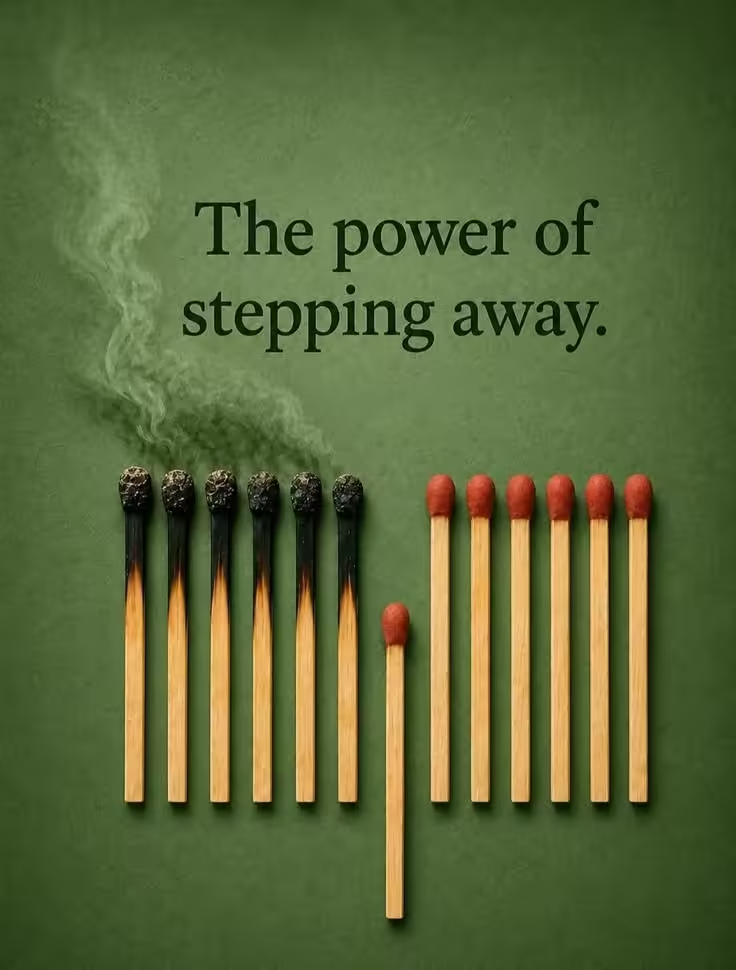
There is something I have been thinking about lately, especially as I look at how the business has been growing and the kind of things I want to achieve next. I am beginning to realise that one of the biggest challenges I might have to overcome is not necessarily finding more customers, getting more traffic or introducing more products. It is learning how to stop making myself responsible for absolutely everything.
For a long time, doing everything myself was simply how the business operated. If a customer placed an order, I handled it. If a card needed designing, I designed it. If something needed printing, I printed it or found someone who could. If there was packaging to be done, I handled that too. Website updates, product listings, social media, customer communication, sourcing materials, following up on payments, checking stock, making decisions and solving problems. Somehow, all of it eventually found its way back to me.
And because I was used to working that way, I didn’t always question it.
There was a certain satisfaction in knowing how every part of the business worked. I knew where things were, how products were made, what needed to be done and what could go wrong. I could make decisions quickly because I was involved in almost everything. When something wasn’t right, I didn’t have to explain it to another person. I could simply step in and fix it.
That worked when the business was smaller. It helped me learn the products, understand the customers and figure out what kind of operations made sense. But I am beginning to question whether that same arrangement can support the kind of business I want to build.
Because there are only so many hours in a day, and there is only so much one person can reasonably do.
I can spend an entire day being productive and still not make progress on some of the things that would actually move the business forward. I could be responding to messages, sorting out printing, arranging deliveries, packaging orders and dealing with small operational issues from morning to evening. At the end of the day, I would be exhausted, but the website might still need attention. The next product might still be an idea. The content I wanted to create might still be sitting in my notes. The systems I wanted to improve might still be waiting for me to find time.
And that is where the problem becomes interesting.
I am working. I am busy. I am handling things. But am I spending enough time doing the work that only I can do?
I don’t think I have always been honest with myself about that distinction.
Sometimes I hold on to tasks because I know how to do them. Sometimes I want to control the quality because I know what I expect the final product to look like. Sometimes outsourcing feels like an additional expense when I could technically do the work myself. And sometimes, if I am being completely honest, it is simply easier to do something myself than to explain it, find someone reliable, agree on the details and trust them to deliver.
But convenience in the moment can become a limitation in the long run.
I have started noticing this in small ways. For instance, outsourcing some of the card printing this season. It meant spending money on something I could otherwise have handled myself, but it also meant I didn’t have to carry every part of production. I could concentrate on other things while someone else handled that particular task. The same thinking applied to bringing in help at home to make the workspace and household responsibilities more manageable.
These might seem like small decisions, but they forced me to reconsider something I had become accustomed to: the assumption that I should personally handle everything simply because it is my business.
I am beginning to understand that owning a business doesn’t mean I have to be the person doing every job within it.
In fact, if I want the business to grow beyond its current size, I cannot keep operating as though my personal time is an unlimited resource. There is a limit to how many cards I can produce, how many orders I can process, how many customer conversations I can manage and how many new ideas I can execute when every single thing requires my direct involvement.
And I have too many ideas to spend all my time maintaining the current workload.
I want to develop more products. I want to improve the websites. I want to work on SEO, create better content, explore new revenue streams, understand what customers are buying and identify opportunities that could take Garo Gift Shop further. I want to make Artmall work too. There are things I want to experiment with, products I want to test and ideas I haven’t even had the time to properly explore.
But wanting to do all these things is not enough if I continue filling my days with tasks that could be handled by someone else.
This is where I think I need to change how I see my role.
I don’t want to be the person who spends the entire day reacting to whatever needs attention. I want to become better at planning, organising, reviewing, making decisions and building systems that allow the business to function without requiring me to personally supervise every small activity.
I want to know what is happening in the business without having to touch everything myself.
That is a different kind of responsibility, and I suspect it will require me to learn a few things I haven’t fully mastered yet.
For one, I will have to become more comfortable with delegating. Not just giving someone a task when I am overwhelmed, but identifying recurring responsibilities that can be handled by another person and creating a process for them. I will need to explain expectations clearly, provide the necessary resources, establish timelines and allow people to do the work without constantly interfering.
I also have to accept that someone else may not do things exactly as I would. That doesn’t automatically mean they are doing them badly. There will be a learning curve, and I will need to distinguish between a genuine quality problem and my personal preference for how something should be done.
I think that distinction will be important.
Because if I outsource something but still want to control every decision, check every step and redo the work myself, then I haven’t really delegated anything. I have simply added another person to my workload.
I also need to become more intentional about the money side of delegation. It isn’t enough to say that I need help. I have to understand which tasks make financial sense to outsource, what they cost, how much time they save and whether that time can be redirected towards activities that generate more value for the business. I want to make these decisions based on actual numbers rather than simply paying for help because I am tired.
There are tasks I may continue doing myself because they are part of the creative process or because the current volume doesn’t justify outsourcing them. There are others that I should probably stop handling altogether. The important thing is knowing the difference.
I don’t want to build a business where every new order automatically means more work for me in exactly the same proportion.
I want to build capacity.
And this is also making me think about the kind of business I want Garo Gift Shop to become. I have been excited about the website generating orders directly, and I want that to continue. I want customers to discover products, make purchases and receive their orders without needing me to personally guide them through every step. But what happens when the number of orders doubles? What happens when there are several products being made simultaneously? What happens when the business has more customers than I can comfortably manage on my own?
I don’t want to wait until that happens to start figuring things out.
I would rather begin creating the systems now, while I can still see where the problems are and make changes without everything becoming urgent.
Perhaps that means documenting how orders are processed, having clearer production schedules, organising stock, creating standard responses for common customer questions, establishing relationships with reliable printers and suppliers, and identifying people who can help with packaging, fulfilment or other recurring tasks.
None of these things is particularly glamorous. They may not make for exciting business announcements. But they are the things that make growth manageable.
I am also realising that my time as the founder should not be valued only by how much physical work I complete. There is value in sitting down to review the financial statements. There is value in looking at which products are selling, which pages are receiving traffic, where customers are coming from and what needs to change. There is value in thinking about pricing, planning the next season and deciding where the next investment should go.
Sometimes I need to spend an afternoon thinking about the business rather than working inside it.
That doesn’t mean I am doing nothing.
It means I am recognising that the business needs more from me than just labour.
And perhaps that is one of the uncomfortable transitions that comes with wanting more. When the business is small, you celebrate being able to do everything. You are the designer, production manager, customer service representative, marketer, accountant, delivery coordinator and sometimes even the cleaner. You become very good at figuring things out because there is nobody else to do them.
But eventually, being good at everything can become the reason you struggle to move forward.
I don’t want to confuse being indispensable with being successful. I don’t want to create a business that cannot function for a day without me because I have made myself the only person who understands how anything works.
I want the opposite.
I want to be able to step away for a few hours without feeling that everything is falling apart. I want to take a day off without spending the entire day checking messages. I want to be able to work on a new product while existing orders continue moving through the system. I want to have time to think about the bigger picture, spend time with Adriel and enjoy the life I am working so hard to create.
And I know that kind of freedom doesn’t happen simply because a business starts making more money. It has to be built into the way the business operates.
I am not there yet. I still have a lot to organise, and I know there will be times when doing something myself is the most practical decision. I am not trying to rush into hiring people or create unnecessary expenses before the business can comfortably support them. I want to grow responsibly.
But I no longer want to use the fact that I am a small business as a permanent excuse for having no systems, no support and no room to delegate.
There is a difference between starting small and thinking small about how the business should operate.
I want to become better at identifying what needs my attention, what can be handled by someone else and what shouldn’t be taking up my time at all. I want to build processes that make the business less dependent on my constant involvement. I want to create an environment where people can contribute meaningfully instead of everything waiting for me to finish one task before another can begin.
I started these businesses because I wanted to create something of my own. I wanted independence, creative freedom and the opportunity to build a different kind of life. I don’t want the very thing I created for that purpose to become another place where I am permanently overworked because I haven’t learned how to let other people help me.
I want to build something that grows, but I also want to grow into the kind of founder who can manage that growth.
And maybe that begins with accepting a simple truth: I cannot be the entire business forever.
I can be deeply involved without being involved in everything. I can care about quality without personally checking every single detail. I can understand the operations without being responsible for every operational task. I can remain hands-on where it matters while learning to step back where it makes sense.
The goal is not to become detached from the business. It is to stop making myself the point through which every single thing must pass.
Because I have bigger things to build, and I need to make room for them.