What if the power we’ve been searching for begins with the person we believe ourselves to be?
There is something I find fascinating about two words we use almost every day without giving them much thought: I am. We use them to introduce ourselves, describe our circumstances, express our fears, and declare who we believe ourselves to be. I am Vinaywa. I am a mother. I am tired. I am unlucky. I am successful. I am broke. I am becoming. Two small words, followed by whatever we have decided is true about us. And yet, when I think about how much of our lives is shaped by the things we believe about ourselves, I cannot help wondering whether we have underestimated the significance of those words.
In the Bible, in Exodus 3:14, Moses asks God about His identity, and God responds with words commonly translated as, “I AM WHO I AM.” Within Christianity, this passage carries a profound theological meaning. It is not simply an affirmation or a declaration of confidence. It is understood as a revelation of God’s identity and being. But what happens when I take a step back and consider the phrase itself, not to claim that I have discovered a secret meaning hidden in scripture, but to ask a question? Why is the language used to describe divine identity also the language through which we describe our own existence? When I say, “I am Vinaywa,” I am identifying myself. When I say, “I am afraid,” I am describing an experience. When I say, “I am successful,” I am making a statement about who I understand myself to be. The phrase appears in all these contexts, but the meaning changes depending on what follows it. And that is where my curiosity begins.
In my previous reflection, The Questions We’re Afraid to Ask, I explored what happens when we begin examining the beliefs we inherited, the religious explanations we accepted, and the assumptions we rarely question because they have been presented to us as unquestionable truth. But perhaps questioning what we were taught about the divine naturally leads to another question: what have we been taught about ourselves? We spend so much time looking outside ourselves for answers, direction, permission, confirmation, and power that I wonder whether we have ever fully examined the person doing all that searching. We ask God to change our circumstances. We pray for opportunities, money, love, healing, protection, and a better life. We ask the universe for signs. We search for methods that will help us manifest what we desire. But who is the person making these requests? What does that person believe about herself? And how much of the life she is trying to create is influenced by the identity she carries into every situation?
I am not suggesting that the questions have an easy answer. I am exploring a possibility: what if consciousness, the sense of being a person who experiences and interprets existence, plays a more significant role in our understanding of the divine and our experience of life than we generally acknowledge? What if some of what we call spiritual power is connected to the power of awareness, identity, belief, and intention? And what if the relationship between the person we believe ourselves to be and the life we pursue deserves as much attention as the things we ask to receive?
There is a difference between saying that God is our consciousness and asking whether our consciousness influences how we understand God. The first is a metaphysical claim, and it is not something we can establish simply by noticing that both God and human beings are described using the words “I am.” The second is a question we can explore through philosophy, spirituality, psychology, and our own experience. Across history, people have understood consciousness and the divine in very different ways. Some spiritual traditions propose that consciousness is fundamental to reality. Some philosophical traditions explore whether the individual self is connected to a larger reality or whether the sense of a separate self is itself something to examine. Many theistic traditions understand God as existing independently of human consciousness, while scientific approaches commonly investigate consciousness through the brain and physical processes. These positions are not interchangeable, and none can be settled merely by choosing the interpretation that feels most appealing.
Still, I find the question worth asking. What if the way we experience the divine is inseparable from the consciousness through which we experience everything else? Even when two people encounter the same event, they may interpret it differently because of their beliefs, histories, fears, and expectations. One sees a coincidence; another sees a sign. One sees an unanswered prayer; another sees a lesson in patience. One sees an opportunity; another sees a risk too frightening to take. The event may be the same, but the meaning they assign to it differs. Does that mean the event has no meaning beyond their interpretation? Not necessarily. It means that our consciousness participates in the way we understand the world, and that we should be careful about confusing the meaning we assign to an experience with proof of what caused it.
Perhaps the question is not simply whether a divine presence exists outside us, but also how we, as conscious beings, understand our place in existence. We are capable of imagining things that do not yet exist, remembering things that no longer exist, and asking questions about realities we cannot fully comprehend. We can look at our current circumstances and imagine a different future. We can observe our own thoughts, question our own assumptions, and decide that a belief we have carried for years no longer serves us. We can imagine a business before it has a customer, a home before it has been built, a relationship before we have met the person, and a version of ourselves that has not yet emerged. Then, sometimes, we act on those imaginings and bring parts of them into the physical world. There is something remarkable about that ability, even without attributing it to a supernatural mechanism.
This is where I begin thinking about manifestation and the things we have been taught about speaking our desires into existence. We are told to visualize, affirm, believe, pray, declare, and behave as though what we desire is already ours. Depending on the tradition, this may be described as faith, the law of assumption, the power of intention, the power of the tongue, or manifestation. The language differs, but there is a common question beneath many of these teachings: does what we believe about our lives influence what becomes possible within them?
I think there is a meaningful way to explore that question without pretending that every desire is guaranteed to materialize simply because we have imagined it. Our beliefs influence what we notice, what we attempt, what we avoid, and how we respond when things become difficult. If I believe I am incapable of succeeding, I may interpret every obstacle as confirmation that I should stop. I may avoid opportunities because I assume I will fail, hesitate to charge what my work is worth, or withdraw before anyone has had the chance to reject me. My belief becomes part of the environment in which I make decisions. It does not need to possess magical powers to influence my results.
Now imagine a person who begins to believe that they are capable of learning, improving, earning more, and building something meaningful. They may start noticing opportunities they previously overlooked. They may be more willing to approach potential clients, develop new skills, ask questions, negotiate, and recover from rejection. Their circumstances may not change overnight, but their participation in those circumstances changes. They are no longer approaching every possibility from the assumption that failure is inevitable. They have given themselves permission to try.
This is one way in which identity can shape a life. The belief influences the behaviour, the behaviour influences the opportunities a person pursues, and those opportunities may influence the outcomes they eventually experience. The process is neither automatic nor guaranteed, but it is real enough to deserve attention. Sometimes the first change is not in the world around us. It is in the way we approach that world.
But there is a question that makes this even more interesting to me. Why do some people seem to pursue what they want with a certainty that others struggle to access? Why do people who appear selfish, dishonest, or cruel sometimes achieve things that kind, prayerful, and well-intentioned people spend years hoping for? Why does someone who seems to have no doubts about their right to take up space sometimes move ahead of someone who is more considerate, more patient, and perhaps more deserving of the opportunity?
We often explain these differences through morality. We expect good people to be rewarded and bad people to face consequences. We may believe that someone who follows the right spiritual principles will eventually prosper, while someone who harms others will eventually lose what they have gained. Yet the world does not consistently unfold according to that expectation. Dishonest people sometimes become wealthy. People who exploit others sometimes gain influence. Those who are willing to take risks, use their connections, bend the rules, or put their interests first may obtain advantages that more ethical people refuse to pursue.
That does not mean cruelty is a special power, that evil people possess a stronger connection to the universe, or that selfishness is the secret to manifestation. It means that success and morality are not the same thing. The world is influenced by systems, access to resources, timing, social connections, inherited advantages, individual decisions, and chance. A person can succeed while behaving badly, just as a person can do everything they reasonably can and still struggle. There is no reliable evidence that cruel people receive what they desire simply because they believe they must have it.
But I do wonder whether some people who appear unusually successful have developed a relationship with desire that other people have not. They know what they want. They are willing to pursue it. They do not spend as much time asking whether they are allowed to want it, whether other people will approve, or whether wanting something makes them selfish. They may be wrong about many things, but they are not necessarily uncertain about their own intentions. That certainty can be useful when it leads to courage, persistence, and decisive action. It can become destructive when it leads to entitlement, exploitation, or the belief that other people exist merely to serve one’s desires.
What if we could learn from the certainty without inheriting the cruelty? What if we could stop treating our desires as something we need to apologize for, while still recognizing that other people have their own needs, boundaries, and rights? What if we could pursue financial freedom without exploiting anyone, desire love without trying to control another person, and build a successful life without needing to believe that we are more deserving of success than everyone else?
Perhaps part of the work is learning to want something without immediately arguing ourselves out of it. We can acknowledge the distance between our current circumstances and our desired future without turning that distance into proof that the future is impossible. We can accept that we do not yet have the money, experience, relationship, or opportunity we want while refusing to make those circumstances the permanent definition of who we are. There is a difference between recognising where we stand and deciding that where we stand is all we will ever be.
This brings me back to the phrase “I am.” We often use it to describe our circumstances as though those circumstances are our identity. I am broke. I am unlucky. I am behind. I am unwanted. I am a failure. Sometimes we say these things because they feel true in the moment. Sometimes we repeat them because we have experienced the same disappointment so many times that we have stopped imagining anything different. But a circumstance and an identity are not necessarily the same thing. Having little money at this moment does not mean that poverty is an essential quality of who I am. Experiencing rejection does not establish that I am inherently unlovable. Making mistakes does not mean that failure is my permanent identity.
The point is not to deny reality. If I have no money in my account, declaring that I am financially abundant does not change my balance. If I have made a mistake, pretending it never happened does not remove its consequences. If a relationship is unhealthy, repeating affirmations about love does not make the relationship safe. We can acknowledge facts without turning them into permanent verdicts about ourselves. We can say, “I am experiencing financial difficulty,” without deciding, “I will always be poor.” We can say, “I have not achieved what I hoped for yet,” without concluding, “I am incapable of succeeding.”
That small distinction matters because it leaves room for movement. It allows us to treat our present circumstances as something to understand and respond to rather than a final judgment on our identity. We can examine what is happening, identify what is within our control, and begin making different choices without pretending that the problem has already disappeared.
There is also something worth examining about the difference between saying “I want to be successful” and “I am becoming successful.” The first can place success in a distant future, a place we may never feel ready to enter. The second can remind us that we are participating in a process. It does not require us to lie about what we have achieved. It invites us to recognise the decisions, habits, and skills through which our future may take shape. We can be becoming more financially responsible while still struggling with money. We can be becoming more confident while still feeling nervous. We can be becoming healthier while still learning how to care for ourselves. We can be becoming more consistent without pretending we have mastered consistency.
Perhaps manifestation becomes more meaningful when we stop treating it as a performance of certainty and begin treating it as a practice of alignment. What do I say I want? What do I believe about my ability to achieve it? What do my daily decisions reveal about those beliefs? Where do my actions contradict my declarations? What am I avoiding because I am afraid of what might happen if I try? What am I continuing to do because it is familiar, even though it no longer supports the life I say I want?
These are not always comfortable questions. It is easier to repeat an affirmation than to examine why we keep abandoning our plans. It is easier to visualize financial freedom than to look at our spending, pricing, business model, or income sources. It is easier to declare that we deserve healthy love than to acknowledge the patterns that keep drawing us into relationships that leave us feeling unwanted. It is easier to say that we are stepping into a new identity than to do the ordinary, repetitive work that allows that identity to become visible in our choices.
But perhaps this is where belief becomes useful. It can help us tolerate the discomfort of becoming someone we have not yet learned how to be. It can remind us that an unsuccessful attempt is not proof that we should never try again. It can give us a reason to keep learning when progress is slower than we expected. Belief does not remove the need for effort. It may help us continue making the effort when the results have not yet arrived.
And yet, I do not want to reduce the entire question to psychology. The reason manifestation appeals to so many people is that some understand it as something more than a change in mindset or behaviour. They believe consciousness, assumption, prayer, or intention has a relationship with reality that extends beyond the effects we can readily observe. Some interpret coincidences as signs, unexpected opportunities as divine provision, or moments when things align as evidence that there is more happening than ordinary cause and effect can explain.
I understand the appeal of those experiences. When something meaningful happens after a period of prayer or intense focus, it is natural to wonder whether the timing means something. Human beings have always searched for patterns, meaning, and connection. We do not experience life as a collection of isolated facts; we interpret events through our hopes, beliefs, memories, and sense of purpose.
But there is a difference between saying an experience is meaningful to us and claiming that it proves a universal law. If I imagine a particular outcome and later experience it, I may interpret that as manifestation. Yet I also need to consider the possibilities that I noticed opportunities I might otherwise have missed, that my actions helped produce the outcome, that coincidence played a role, or that I am remembering the successful instances more vividly than the times my expectations did not materialize. These explanations do not invalidate the meaning I find in my experience. They remind me that meaning and proof are not always the same thing.
What if there is more to consciousness than we currently understand? It is a legitimate question. But what if some of what we call manifestation can already be explained by attention, expectation, motivation, decision-making, and behaviour? That is also worth exploring. We do not have to pretend that every mystery has been solved, nor do we have to fill every gap in our knowledge with an explanation that confirms what we hope is true.
The same care is necessary when we consider whether human consciousness is God. It is an idea that appears in different forms across spiritual and philosophical traditions, but it is not a conclusion that follows automatically from the phrase “I am.” A Christian may understand the divine as the creator who exists independently of human beings. Someone influenced by nondual philosophy may explore whether the distinction between individual consciousness and ultimate reality is as straightforward as it appears. Another person may understand consciousness as an aspect of the natural world without believing it is divine at all. These are different frameworks, and we should be honest about the differences.
Still, the question can change the way we approach our own lives even if we never settle the metaphysical debate. If I spend my life imagining that all power is elsewhere, that I must wait for someone or something outside me to grant permission for my life to begin, I may overlook the choices available to me now. If I believe that every outcome depends entirely on forces beyond my influence, I may become passive in situations where action is possible. On the other hand, if I believe that I alone control everything, I may blame myself for events that were never mine to control.
Neither extreme seems helpful. We are neither powerless observers of our lives nor all-powerful creators who can command every outcome. We exist in relationship with the world, with other people, with circumstances we inherit, and with possibilities we can sometimes influence. We have agency, but our agency has limits. We can shape parts of our lives, but we cannot guarantee every result. Perhaps wisdom begins with understanding both truths at the same time.
This is especially important when we talk about suffering. If our beliefs influence our lives, it can be tempting to conclude that people who suffer must have held the wrong beliefs. If we say consciousness creates reality, we may accidentally suggest that people manifest their own poverty, abuse, illness, or grief. That is not a conclusion I am willing to accept. People experience hardship for many reasons, including circumstances beyond their control, the actions of others, unequal systems, biological realities, and chance. A child does not deserve suffering because of a thought they had. A person who has experienced abuse did not necessarily attract it through their beliefs. Someone who has prayed for healing and remains ill has not automatically failed to believe strongly enough.
The idea that we have some influence over our lives should expand our sense of possibility, not become another way to blame ourselves for everything that goes wrong. We can take responsibility for the choices available to us without accepting responsibility for every event that has shaped us. We can believe that our future may change without pretending that we chose every part of our past.
There is another side to this question that deserves attention: the way our beliefs can be used by other people. If someone convinces us that our thoughts control every outcome, they can also convince us that every failure is our fault. If someone claims to know the exact spiritual principles required to manifest wealth, they may gain influence over people who are desperate for financial relief. If someone tells us that doubt blocks blessings, they may make us afraid to question the very claims they are making. A teaching that begins by promising personal power can become a mechanism of control when it tells people that the only reason they have not succeeded is that they have failed to believe correctly.
This is one reason I think discernment matters just as much as belief. We should be able to explore spiritual ideas without surrendering our judgment to anyone who claims to possess secret knowledge. We should be able to pray, affirm, visualize, or meditate without being told that we must ignore practical evidence. We should be able to hope for extraordinary things while asking ordinary questions about money, health, work, relationships, and the decisions required to change our circumstances.
If someone tells me that I can manifest financial abundance, I can ask what that means in practice. Does it help me become more intentional about the opportunities I pursue? Does it encourage me to build skills, manage my money, and act with greater confidence? Or does it ask me to ignore my circumstances and wait for the universe to deliver what I want? Does it make me more capable of making decisions, or more dependent on someone else’s interpretation of my thoughts and spiritual state?
Those questions do not have to destroy the practice. They can help me use it more responsibly.
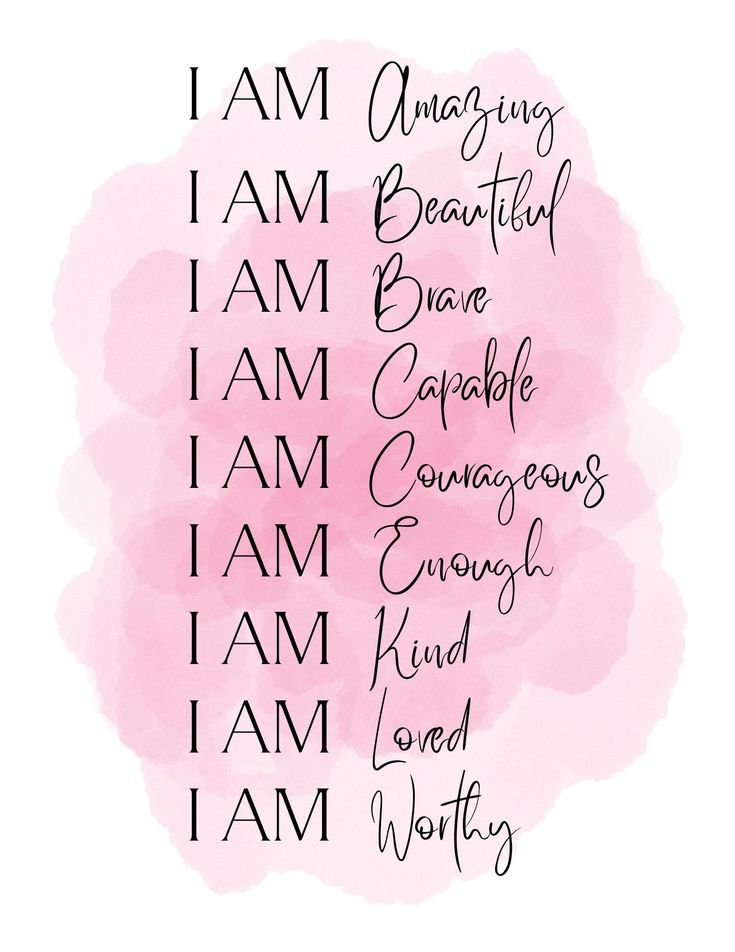
When I say, “I am financially secure,” I can understand it as a reminder of the financial life I am working toward. I can use it to challenge the belief that I will always struggle. I can allow it to influence the choices I make about spending, saving, earning, and investing. But I must also acknowledge that financial security depends on real conditions, and that my words cannot guarantee an income or eliminate every risk. If I say, “I am loved,” I can remind myself that I deserve relationships built on respect and care. But I cannot use an affirmation to make another person love me or override their freedom to choose. If I say, “I am healthy,” I can reinforce my commitment to caring for my body, but I should not use the declaration as a substitute for medical attention when I need it.
In this way, “I am” becomes neither a magic spell nor an empty sentence. It becomes an invitation to examine the relationship between the person I believe myself to be and the choices I make. It asks whether I am reinforcing an identity that keeps me stuck or cultivating one that helps me move forward. It asks whether my declarations are connected to the life I am actually building or whether I am using them to avoid the discomfort of building it.
And perhaps this is the deeper possibility that interests me most. What if the power of “I AM” is not about convincing reality to obey every sentence we speak, but about recognising that the way we define ourselves matters? What if the practice is not to deny our present circumstances, but to stop confusing those circumstances with the limits of our identity? What if the point is to become more conscious of the beliefs through which we interpret our lives, more intentional about the actions those beliefs encourage, and more honest about the things we can and cannot control?
I still find myself wondering about the divine. I still find the relationship between consciousness and existence fascinating. I still wonder why human beings across different traditions have reached for language, ritual, prayer, and belief to explain what they cannot fully understand. I do not think those questions can be resolved by a clever interpretation of two words. But perhaps the phrase “I am” offers a place to begin examining the connection between belief and identity, between what we imagine and what we pursue, between the life we have inherited and the life we are trying to create.
We may never agree on whether consciousness is the source of reality, a part of creation, or a phenomenon that can be fully understood through natural processes. We may continue to disagree about the nature of God, the meaning of prayer, and whether manifestation involves anything beyond the observable effects of belief and behaviour. Those are substantial questions, and I do not want to pretend that I have solved them.
But I can ask what my beliefs are doing in my life. I can examine whether they help me become more courageous or more fearful, more responsible or more passive, more compassionate or more entitled. I can ask whether the things I declare about myself are helping me take meaningful action or allowing me to avoid it. I can recognize that I have influence without pretending that I have unlimited control.
And perhaps the most important question is not whether I can think my way into any reality I desire. It is whether I am willing to become an active participant in the reality I hope to build.
When I say, “I am Vinaywa,” I am naming myself. But beyond the name, I am also a person whose understanding of herself continues to change. I am someone who can question what she inherited, examine what she believes, learn from what has happened, and choose how she responds to what comes next. I am not required to remain the person I was simply because that is the person I have always known. Nor do I need to pretend that I can become absolutely anything without limits, effort, or circumstance.
Perhaps becoming begins with allowing the possibility that our current understanding of ourselves is incomplete.
Maybe we have spent too much time asking for permission to become the people we imagine, and too little time examining what keeps us from taking the next step. Maybe we have confused hope with waiting, faith with certainty, and manifestation with the expectation that something outside us must deliver the outcome. Maybe there is value in turning our attention inward, not because we will discover that we are all-powerful, but because we may discover that we have more agency than we have been using.
And maybe the question is worth sitting with, even if we never arrive at one final answer: when you say “I am,” what are you telling yourself about the person you are, the person you can become, and the life you believe is possible?
Because whether those two words are, for you, a spiritual declaration, a statement of identity, a psychological affirmation, or simply the beginning of a sentence, they reveal something worth examining.
They reveal the story you are telling yourself about who you are.
And once you begin questioning that story, you may discover that some parts deserve to be released, some deserve to be strengthened, and others are waiting for you to decide what they will mean.
Not because every thought creates the world. Not because every desire is guaranteed. Not because we are responsible for everything that happens to us.
But because the person we believe ourselves to be is part of the person who meets the world, makes choices within it, and determines what to do with the possibilities that become available.
Perhaps that is where the power begins: not in having complete control over existence, but in becoming more conscious of the part we play in our own lives.