
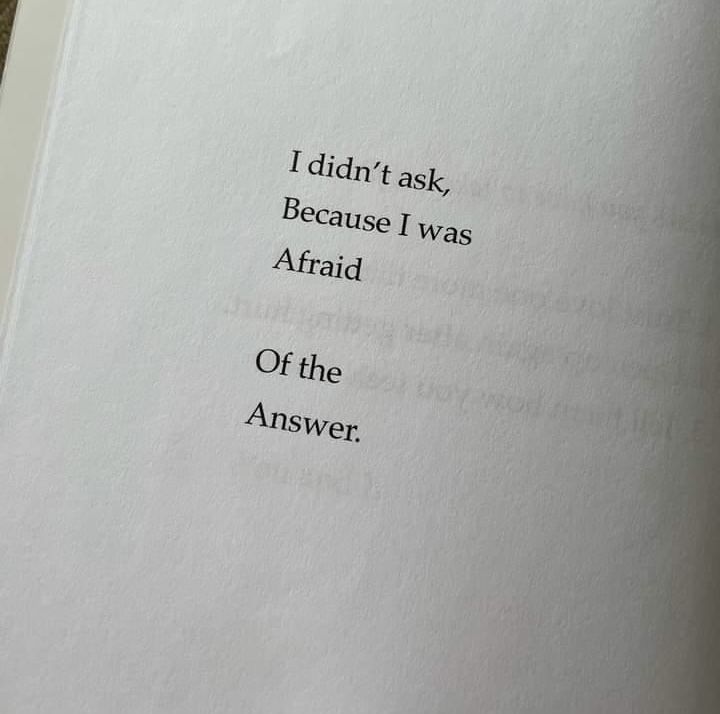
Sometimes I wonder whether asking questions about God is really a sign of weak faith, or whether we have simply been taught to associate faith with never questioning anything. Because there are things I have heard all my life that, when I sit down and think about them honestly, raise even more questions than they answer. And I am not asking because I want to disrespect Christianity, insult anyone’s beliefs, or prove that God does not exist. I am asking because if something is supposed to be the truth, surely it should be able to withstand an honest examination.
I was taught about Adam and Eve, about how God created the world, gave humanity free will, and placed a forbidden tree in the Garden of Eden. They were told not to eat from it, they ate from it anyway, and sin entered the world. But if God already knew what would happen, why create the tree? Why create human beings knowing they would make a choice that would change the course of human history? If God knew the consequences before they happened, was the outcome really a surprise to anyone except the people living through it?
I understand the argument that knowing something will happen is not necessarily the same as causing it to happen. If I know someone well enough to predict how they might react, my knowledge does not automatically force them to react that way. But the comparison becomes more complicated when we are talking about an all-knowing God who created the people, the environment, the circumstances, and the very possibilities from which they would choose. If God knew exactly what Adam and Eve would do, could have created a different world, and chose this one, then what exactly are we meant to understand about that choice?
Perhaps the story is meant to teach us about trust, responsibility, and the desire to define good and evil on our own terms. Perhaps it is symbolic, theological, or intended to communicate something deeper than a literal account of two people eating fruit. Christians themselves interpret it in different ways. But even if I accept the story as a lesson about human nature, I am still left wondering why the consequences extend so far beyond the original act. Why should generations of people be born into a condition they did not personally choose?
That question becomes even more complicated when I think about inherited sin.
We are told that humanity inherited the consequences of Adam’s disobedience. Christian traditions disagree about precisely what this inheritance means. Some teach that humanity inherits original guilt; others emphasize a fallen condition, a tendency toward sin, or separation from God. Not every Christian tradition understands the doctrine in the same way. But whichever explanation we follow, I cannot help noticing the difference between what we say we inherit spiritually and what we seem to inherit in other areas of life.
If we can inherit the consequences of someone else’s decision, why do we not inherit all their blessings too?
Why inherit Adam’s sin but not Abraham’s wealth? Why do we speak about the spiritual consequences of one man’s actions reaching generations, but we do not expect Abraham’s material abundance to reach every person who believes in God? Why can Samson’s extraordinary strength be part of a biblical story that inspires faith without every believer receiving that same strength? Why do some promises in the Bible seem to belong to particular people in particular circumstances, while other consequences are presented as universal?
I know that the Bible is not a contract promising every believer the same life. I understand that Abraham, Samson, Job, and other biblical figures lived within particular stories, covenants, and circumstances. Still, the contrast is worth examining. When the story concerns human failure, we sometimes explain how the consequences reach everyone. When the story concerns extraordinary blessing, we are often reminded that the circumstances were unique.
Perhaps there are sound theological reasons for that distinction. Christianity also teaches that grace and redemption through Christ address the problem of sin. But the question remains: how much of what we call God’s system do we understand, and how much have we learned to accept because someone told us that questioning it was dangerous?
And then there is the question of prayer.
Christians pray, Muslims pray, Hindus pray, and people from countless other religious traditions pray. They ask for healing, provision, protection, children, peace, success, and relief from suffering. People from different faiths describe experiences they understand as answered prayers. Some say their God provided what they needed. Others describe spiritual encounters, moments of clarity, unexpected opportunities, or a sense of being carried through difficult circumstances.
So how do we determine which God is the real one?
Islam teaches that there is one God, Allah, and Muslims understand their faith as a continuation of the monotheistic tradition associated with Abraham. Christianity also teaches one God, but understands God through the Trinity and identifies Jesus as divine and central to salvation. Hindu traditions are extraordinarily diverse: some worship particular deities, some understand multiple deities in relation to one ultimate reality, and others approach the divine through philosophical frameworks that do not fit neatly into the categories many Christians use. Other religions and spiritual traditions have their own accounts of ultimate reality, human purpose, and what happens after death.
These beliefs are not all saying exactly the same thing. Some make claims that directly conflict. They cannot all be correct in every detail if their claims contradict one another. But the fact that people belonging to different traditions experience comfort, meaning, transformation, and what they consider answered prayers raises a difficult question for anyone who believes their own religion is the only true path.
If a Christian prays and receives what they consider a miracle, that experience may strengthen their belief in Christianity. If a Muslim experiences something similar after praying to Allah, it may strengthen their belief in Islam. If a Hindu experiences an answer to prayer or a profound spiritual encounter, it may reinforce their understanding of the divine.
From inside each tradition, the experience can feel like confirmation. From the outside, however, we are looking at people from different traditions reporting experiences that matter deeply to them.
Can the experience alone tell us which interpretation is correct?
I do not think it can.
A person receiving something they prayed for does not automatically prove every theological claim associated with their religion. Nor does an unanswered prayer prove that their God does not exist. People remember the times things worked out, interpret events through the beliefs they already hold, and sometimes find meaning in outcomes they did not initially want. There are also people in every religion who pray sincerely and never receive the answer they were hoping for.
If answered prayer is used as proof that one religion is true, then consistency requires us to take seriously the similar experiences reported by people in other religions. We cannot automatically treat our own experiences as evidence of divine truth while dismissing everyone else’s as coincidence, illusion, or deception without explaining why we apply different standards.
Perhaps there is a God who hears people across religious boundaries. Perhaps some religious traditions understand aspects of reality correctly while misunderstanding others. Perhaps one tradition is right in ways that others are not. Perhaps the truth is different from all the explanations human beings have constructed. These are possibilities to examine, not conclusions I can simply declare.
Philosophers of religion have long debated these questions through positions often described as exclusivism, inclusivism, and pluralism. Some believe one religion alone provides the true path to salvation; others believe one tradition holds the fullest truth while people outside it may still encounter divine grace; others argue that more than one religion may provide a genuine path to ultimate reality. The existence of these positions does not settle the debate, but it shows that religious diversity is not a trivial problem that disappears when someone says, “Just have faith.”
And if we are going to ask which religion is true, we should also ask how we came to believe the religion we currently follow.
Most of us do not begin life by independently comparing Christianity, Islam, Hinduism, Buddhism, African traditional religions, and every other spiritual tradition before making a carefully reasoned decision. We usually inherit our first understanding of God from our parents, families, communities, and the society in which we grow up. A child born into a Christian family in Kenya is likely to learn Christianity. A child born into a Muslim family may grow up learning Islam. A child born into a Hindu family may understand the world through Hindu teachings.
That does not mean the religion they inherit must be false. A belief does not become untrue merely because our parents taught it to us. But it does mean that the circumstances of our birth influence which religious claims we are exposed to, which stories feel familiar, which practices feel sacred, and which alternatives we may never seriously consider.
If I had been born somewhere else, into a different family, would I be defending the same understanding of God with the same certainty? Would I be convinced that another religion was false simply because I had grown up hearing that it was?
That is a difficult question because it asks me to separate what I believe from the circumstances that first taught me to believe it.
And this brings me to Africa, Christianity, and the history we sometimes discuss as though it were a simple story of people arriving with the Bible and introducing God to a continent that had never known anything about the divine.
That is not an accurate account of African history.
Christianity existed in parts of Africa long before the major European missionary movements associated with colonial expansion. Ancient Christian communities developed in North Africa, and Christianity became deeply established in Ethiopia and the kingdom of Aksum centuries before the colonial era. In other parts of the continent, European missionary activity expanded much later, often alongside growing European commercial and political power. African societies also had their own religious and spiritual traditions long before European missionaries arrived.
Africa was not a spiritually empty continent waiting for someone to introduce it to God.
Our ancestors had beliefs, moral systems, rituals, understandings of creation, relationships with their communities, and ways of making sense of life and death. These traditions were diverse, just as African societies themselves were diverse. Some people may have found aspects of Christianity compelling; others converted for different reasons; others resisted it; and many Africans reshaped Christianity according to their own experiences and understanding.
But the history of European missionary activity in Africa is complicated by the fact that it frequently overlapped with colonial expansion, political domination, and economic interests. Historical scholarship documents the close relationship between some missionary enterprises and colonial power, while also showing that missionaries did not all hold identical views or serve identical purposes. Some opposed aspects of colonial exploitation and slavery; others participated in, accommodated, or helped normalize systems of colonial control. African converts, teachers, evangelists, and church leaders also played central roles in spreading and reshaping Christianity across the continent.
So when I ask whether Christianity was sometimes used as a tool of manipulation, I do not think that question should automatically be dismissed as disrespectful.
Imagine someone arriving in your home, telling you that your beliefs, customs, spiritual practices, and ways of understanding the world are inferior or wrong. Imagine that this person belongs to a society that claims authority over your land, your labour, your education, and your future. Imagine that the same system benefits from your submission while presenting its own culture as the standard by which your humanity is measured.
Would it be unreasonable to ask whether religion was sometimes used to make domination easier?
If someone wants access to your land and resources, controlling your body is one way to do it. Controlling the laws around you is another. But influencing what you believe about yourself, what you consider acceptable, what you fear, and whom you believe has the right to lead you can be powerful too.
If people can be persuaded that their own traditions are backward, that their ancestors were ignorant, that obedience to foreign authority is a virtue, or that their suffering in this life should be endured in exchange for a better life after death, those ideas can affect how they respond to exploitation. Religion can be used to encourage resistance, but it can also be used to encourage submission. Its power lies partly in the fact that it speaks not only to what people do, but also to what they believe their lives mean.
That does not prove that every missionary arrived with a secret plan to steal African resources. It would be historically careless to assume that every individual had the same motives. Some genuinely believed they were saving souls. Some established schools and medical institutions. Some criticized abuses committed by colonial authorities. Others worked within systems that advanced European cultural influence and helped make colonial rule more sustainable. Some people may have held sincere religious convictions while also participating in structures that harmed the people they claimed to help.
Human motives are not always pure or singular. A person can sincerely believe in the message they are spreading and still contribute to a system of domination. A religious institution can provide education and care while also undermining local cultures or serving interests beyond spiritual salvation. Good intentions in one area do not erase harmful consequences in another.
And that is precisely why I think we need to be able to examine the history without being forced into one of two positions: either every missionary was a saint who brought civilization to Africa, or every missionary was a calculating villain who knew exactly what they were doing. History is more complicated than either story.
But there is another question that troubles me even more.
If Christianity was brought to Africans in part through institutions and individuals who sometimes treated African people as inferior, what are we supposed to make of the Christianity they preached?
In 2026, we live in a world where the language of equality is widely recognized, yet racism, racial prejudice, unequal treatment, and the legacies of colonialism remain subjects of serious concern. People of African descent continue to encounter situations in which their dignity, intelligence, competence, or belonging is questioned because of their race. That does not mean every person from a historically colonial society despises Africans, nor does it mean every interaction between Africa and the West is defined by racism. But where racial contempt and unequal treatment exist, the contradiction is difficult to ignore.
How can someone preach that every human being is made in the image of God while treating another human being as less worthy because of the colour of their skin?
How can a person speak about the love of Jesus and still participate in humiliation, exploitation, or discrimination?
If the message is that we are all God’s children, why has that message so often been communicated alongside hierarchies that placed some people above others?
The contradiction does not automatically prove that Christianity is false. A person can fail to live up to a belief that is true. Christians themselves can point to the teachings of Jesus as a basis for condemning racism, greed, and the abuse of power. But it does raise a legitimate question about the relationship between religious ideals and the institutions, cultures, and people claiming to represent them.
Perhaps one of the most important questions we can ask is not only whether Christianity is true, but whether the people who taught it to us consistently practised what they preached.
And if they did not, why were their words sometimes treated as more authoritative than the dignity and humanity of the people they were addressing?
I also wonder whether we have underestimated the extent to which religion can become intertwined with power. When people tell us that God has chosen a particular nation, group, leader, or institution, we should ask what that claim accomplishes. Who benefits from it? Who is expected to obey? Who is permitted to question it? Who is told that their suffering is part of a divine plan, and who gets to decide what that plan means?
These questions are not limited to Christianity. Any religious tradition can be used by people seeking authority, status, wealth, or control. Religious identity can inspire generosity and courage, but it can also be used to divide people into the righteous and the unworthy. The problem is not that religion always produces manipulation. The problem is that sacred language can make manipulation harder to challenge because disagreeing with a human authority can be presented as disagreeing with God.
And once a person believes that questioning a leader is the same as questioning God, that leader acquires an extraordinary kind of power.
This is why I think it is important to distinguish God from the people who claim to speak on God’s behalf. If God exists, God is not identical to every preacher, missionary, church, religious institution, or political authority that has ever invoked His name. Human beings can be sincere and mistaken. They can be compassionate in one moment and self-serving in another. They can interpret their scriptures through the assumptions of their time and then present those interpretations as if no other understanding were possible.
But if we acknowledge that, we must also accept that our own religious understanding may need examination. We cannot question everyone else’s interpretation while treating ours as automatically beyond criticism.
And perhaps this is where the question of free will returns.
We are told that God gave human beings free will, and that free will helps explain why people commit evil. People choose to wage wars, exploit others, abuse children, steal, discriminate, and inflict suffering. If God prevented every harmful human decision, the argument goes, human freedom would be compromised.
I understand the logic. But I also wonder where the explanation stops.
If someone is about to murder an innocent person, would preventing that act necessarily destroy the person’s freedom? If a child is about to be harmed, would intervention eliminate human agency, or would it simply prevent one person from exercising their agency through violence against another? We intervene in harmful situations all the time without concluding that every form of freedom must disappear.
And if God is capable of intervening, why does the intervention seem so inconsistent from the human perspective? Why are some people rescued while others are not? Why do some people survive disasters that kill others? Why do some prayers seem to receive extraordinary answers while other equally sincere prayers appear to go unanswered?
The problem becomes impossible to ignore when I think about wars and the suffering of civilians in places such as Gaza and Iraq. Children lose parents, parents bury children, families lose homes, and people who had no meaningful say in the decisions that led to violence pay an unbearable price. These are not abstract theological examples. They are human lives.
It is easy to say that human beings have free will when discussing evil in general. It is much harder to explain why an all-powerful God would allow particular acts of cruelty to reach their most devastating consequences when intervention might have prevented them.
Some Christians explain this through the idea of a fallen world. Others emphasize the limits of human understanding, the possibility of eventual justice, or the belief that God can bring redemption out of suffering. These are serious theological responses, and believers are entitled to explore them. But none of them removes every difficulty. Saying that God can bring good out of an evil event is not the same as proving that the evil was necessary, deserved, or good in itself.
Sometimes people speak as though every tragedy must have been allowed for a reason that will eventually make sense. But what happens when the explanation never comes? What do we say to someone who loses a child, suffers an injustice, or spends their entire life waiting for a breakthrough that never arrives?
Can we admit that we do not know why without treating that admission as a failure of faith?
The story of Job makes this question even more uncomfortable. Job is presented as a righteous man who suffers terribly, and the story challenges the idea that suffering is always evidence of wrongdoing. His friends repeatedly try to explain his pain through a moral framework in which suffering must correspond to guilt. The story exposes the inadequacy of that reasoning.
But Job’s suffering is still devastating. His children die. His life is dismantled. His grief is real. Even if the story has a theological purpose, I cannot help asking what the explanation means for the people whose suffering does not end with restoration, whose children do not return, and whose lives are never rebuilt in the way Job’s eventually is.
If God already knew the outcome, what did the test establish? If the story is intended to reveal something about faith, why must the demonstration involve such profound suffering? And what are we meant to do with the people whose lives resemble the beginning of Job’s story but never reach its ending?
Perhaps the book is not meant to give us a formula for understanding every tragedy. Perhaps it is meant to expose the danger of pretending that we can explain another person’s suffering. But if that is the lesson, we should stop using phrases such as “everything happens for a reason” as though we have access to God’s private reasoning.
Sometimes the most honest response to suffering is not an explanation. It is compassion, practical help, and the humility to say that we do not know.
This brings me to another teaching that has shaped how many people understand their lives: the power of the tongue.
Proverbs 18:21 is often quoted as saying that death and life are in the power of the tongue. I understand why words matter. Words can encourage a person to keep going or convince them that they are worthless. They can damage relationships, strengthen confidence, reinforce fear, and influence the decisions we make. If I repeatedly tell myself that I am incapable, I may eventually stop trying. If I begin to believe that improvement is possible, I may become more willing to learn, take risks, and pursue opportunities.
In that sense, words have power.
But sometimes the teaching goes further. We are told that speaking negatively can invite misfortune, that saying something bad will happen may cause it to happen, and that we must declare our blessings before we see them. We hear warnings about speaking poverty, sickness, failure, or disappointment into existence.
And I wonder: if words have such extraordinary power, why does the power appear to work so differently depending on what we say?
If I declare that I will earn KSh 500,000 consistently every month, will the money automatically arrive? If I announce that I have KSh 10 million, will the declaration itself change my bank balance? If I speak of a successful business, will customers appear simply because I have spoken confidently about success?
Of course not. Words can shape my attitude, but I still need a viable business, customers who want what I sell, effective marketing, good financial decisions, and the ability to adapt when something is not working. External circumstances matter. Other people make decisions. Markets change. Unexpected events happen. Some opportunities depend on factors I cannot control.
Positive declarations can help me focus on a goal, but they are not a substitute for the conditions and actions required to achieve it.
The same principle should apply to negative words. If I say that I am afraid of failing, that does not mean I have summoned failure into my life. If I express concern about my health, I have not necessarily spoken an illness into existence. If I admit that I am struggling financially, I have not automatically closed the door to future prosperity.
There is a difference between allowing our words to shape our behaviour and believing that our words control reality itself.
When people are told that their suffering happened because they spoke negatively, they may end up carrying guilt for events they did not cause. A person who becomes ill may wonder whether they used the wrong words. Someone experiencing financial difficulty may feel that admitting their struggle made it worse. A grieving person may replay a sentence they once said in anger or fear, worrying that they somehow invited the tragedy.
That is a heavy burden to place on human beings, especially when they are already suffering.
If words are powerful, surely that power should include speaking honestly about pain, asking for help, naming injustice, and admitting uncertainty. Why should declaring a problem be treated as more dangerous than refusing to acknowledge it?
And why do we sometimes treat a negative declaration as spiritually powerful while treating a positive declaration as a guarantee of a future that may never materialize?
Perhaps the more grounded understanding is that words matter because they influence how we think, communicate, and act, not because every sentence is a command that reality must obey.
A thought is not a verdict. A fear is not a prediction. And a sentence is not proof that the future has already been decided.
I can believe that hope matters without believing that every disappointment was caused by a failure to think positively enough. I can pray for abundance while acknowledging that abundance also requires planning, work, opportunity, and sometimes circumstances beyond my control. I can speak life without pretending that life is always under my command.
And if I can question this teaching about words, I should also be able to question the way we speak about evil.
Christians often say that God is all-powerful, that evil cannot ultimately defeat Him, and that the devil is not equal to God. Yet some religious conversations make evil sound almost omnipotent. We are warned about jealous people, curses, spiritual attacks, enemies who want to destroy our destiny, and unseen forces supposedly responsible for every setback.
It can begin to sound as though God is powerful in theory, but evil is the force we must constantly fear in practice.
If God is greater than evil, why are so many believers encouraged to live as though someone else’s jealousy or a hidden spiritual attack can easily derail their lives? Why do ordinary business difficulties, relationship problems, illnesses, or periods of uncertainty sometimes become evidence of spiritual warfare before anyone considers practical explanations?
There may be experiences that people interpret through their spiritual beliefs, and I do not think every spiritual question can be dismissed simply because it cannot be measured in a laboratory. But there is a difference between acknowledging the possibility of spiritual realities and treating every hardship as proof that an unseen enemy is targeting us.
If every failure is a curse, we may overlook a poor business decision. If every illness is attributed to spiritual attack, we may delay seeking medical care. If every disagreement is blamed on jealousy or evil intentions, we may fail to examine our own behaviour or recognize an ordinary misunderstanding.
Fear can become a system of control, especially when someone claims to possess the knowledge or power required to protect us from the threats they keep describing.
And again, I have to ask: who benefits when people are taught to be afraid?
Does a person’s faith become stronger when they are constantly afraid of being spiritually attacked, or do they become more dependent on whoever promises to protect them? Does belief in God’s power bring peace, or does it sometimes become another source of anxiety because believers are told that they must perform the right rituals, speak the right words, give the right offerings, or identify the right enemies to remain safe?
These questions do not prove that spiritual evil does not exist. They do remind me that fear should not be mistaken for evidence, and that religious claims should not be exempt from the same careful thinking we apply elsewhere.
The question of why bad things happen to good people, and why bad people sometimes prosper, remains at the centre of all of this.
If righteousness guarantees blessing, why do cruel people sometimes accumulate wealth and influence while compassionate people struggle to meet basic needs? Why do dishonest people exploit others and appear to succeed? Why are some of the kindest people I know forced to endure circumstances they did not create?
The Bible itself does not always present life as a neat system in which good behaviour produces immediate rewards. Ecclesiastes wrestles with life’s apparent unfairness, while Psalm 73 describes the distress of seeing the wicked prosper. These texts matter because they acknowledge that the gap between what we believe should happen and what actually happens is not a new problem.
We sometimes try to resolve the discomfort by saying that wealth is not the same as blessing, that suffering builds character, that justice will come in the next life, or that we cannot understand God’s timing. Some of those ideas may offer comfort, depending on a person’s beliefs. But they can become harmful when used to silence people who are suffering or to imply that their hardship is necessary for their spiritual development.
Poverty does not automatically mean a person has been rejected by God. Wealth does not establish that someone is more righteous. Survival does not mean a person deserved to survive more than someone who died. And a person who suffers is not necessarily being punished, tested, refined, or prepared for something greater.
Sometimes people suffer because other people have harmed them. Sometimes systems distribute opportunities unfairly. Sometimes illness and disaster strike without regard for character. Sometimes people make decisions that have painful consequences. And sometimes we do not know why a particular event occurred.
We do not have to turn every outcome into a moral verdict.
Perhaps the hardest question is what all this means for faith itself.
If I question the origin of a religious belief, am I rejecting God? If I examine the history of missionaries, am I denying the possibility that Christianity contains truth? If I acknowledge that Muslims and Hindus have sincere religious experiences, am I required to abandon my own beliefs? If I cannot explain why God allows suffering, does that mean I have failed to trust Him?
I do not think these questions need to be answered with immediate certainty.
There is a difference between rejecting something without examining it and examining something without knowing where the examination will lead. There is a difference between questioning a religious institution and dismissing every person who belongs to it. There is a difference between acknowledging that religion has been used to justify oppression and claiming that every religious belief is nothing more than a tool of control.
I can recognize the harm done in the name of Christianity without assuming that every Christian is malicious. I can respect Muslims and Hindus without pretending that every religion teaches identical things. I can acknowledge the role Christianity has played in African history without erasing African agency, African Christian communities, or the people who genuinely found meaning in the faith.
And I can question God without pretending that I already know the answer.
Perhaps what I am really searching for is a way to distinguish God from the certainty of the people who claim to understand Him. I want to know whether a belief is true because it withstands honest examination, or whether I believe it because I was taught that questioning it would make me disobedient, ungrateful, or spiritually unsafe.
I want to understand why we sometimes use different standards for our own faith and everyone else’s. Why our answered prayers are treated as evidence while another person’s answered prayers are dismissed. Why our scriptures are presented as authoritative while another tradition’s sacred texts are treated as mythology. Why the suffering of people in our own community is a mystery requiring compassion, while the suffering of outsiders can be explained away as the consequence of their beliefs.
If truth matters, it should matter consistently.
And if God is just, then surely justice should matter beyond the boundaries of a particular religion, nationality, or race.
I do not know which religious tradition, if any, possesses the complete understanding of ultimate reality. I do not know why a God who knows the future would create a world in which so much suffering is possible. I do not know why some prayers seem to be answered while others are not, or why human beings inherit certain consequences without inheriting every blessing. I do not know whether our words influence events in ways we do not fully understand, or how much of what we call spiritual warfare reflects actual spiritual realities rather than fear, culture, or human interpretation.
But I do know that pretending to know what I do not know would not bring me closer to the truth.
Perhaps faith does not require me to have an immediate answer to every question. Perhaps it requires me to remain open to the possibility that my understanding is incomplete. Perhaps the point is not to abandon belief whenever something becomes difficult to explain, but neither is it to invent an explanation simply because uncertainty makes me uncomfortable.
And perhaps the same humility should apply to the history of religion. If Christianity was used in some places to help justify colonial power, we should be able to acknowledge that without assuming that this settles every question about Jesus or God. If people have used religion to manipulate others, we should be able to name the manipulation without concluding that every act of worship is insincere. If different religions contain people who experience what they understand as divine presence, we should take that reality seriously without pretending that the question of religious truth has therefore been settled.
I am not asking these questions because I want to be difficult. I am asking because I want to understand what I believe, why I believe it, and whether the things I was taught can withstand the questions that come with growing older and looking at the world more honestly.
I want to know whether God is as just as we say He is, whether divine love can be reconciled with suffering that seems unbearable, and whether the people who speak most confidently about God are always the people we should trust most.
I want to understand why human beings have spent centuries fighting over whose God is real, sometimes killing one another in the process, when every side may believe it is defending the truth. I want to know whether our certainty about God sometimes tells us more about our upbringing and our communities than it tells us about God Himself.
And I want to be able to ask these questions without being frightened into silence.
Maybe the opposite of faith is not always doubt. Maybe sometimes it is the fear of being honest.
Because if God is truth, then an honest question should not be more threatening than a comfortable lie. If God is just, then examining injustice should not be an act of disrespect. And if God gave human beings the ability to think, question, observe, and seek understanding, then perhaps using those abilities is not a betrayal of faith.
Perhaps it is part of being human.
I may not arrive at a neat conclusion. I may continue to believe in God while questioning the way religion has been explained to me. I may discover that some beliefs I once held with certainty are more complicated than I thought. I may find that some questions have answers, while others remain open.
But I would rather confront those questions honestly than build my entire understanding of God around the fear of asking them.
Because I do not want to believe something merely because I am afraid of what will happen if I stop believing it. I want to understand the difference between faith and fear, between God and the institutions that speak in His name, between genuine conviction and inherited certainty, and between a truth that can withstand examination and a belief that survives only because no one is allowed to question it.
And if the answers are bigger than my understanding, I can live with that.
What I find harder to accept is being told that I must stop asking simply because someone else claims to have already figured everything out.